
Search smallrig.com...


A Photographer Is a Director | ONSITE: Li Fan Talks With SmallRig
ONSITE 2026-01-21 00:19:26
A Photographer Is a Director | ONSITE: Li Fan Talks With SmallRig, the First Chinese Photographer to Win a World-Class Award at the Cannes Palais des Festivals
For 45 years, photographer Li Fan has traversed the globe, using his camera to document the passage of time and humanity's diverse tapestry. Critics describe his work as "visual poetry with a soulful warmth."
Li's 45-year career has taken him across China and beyond. His 20-year dedication to the Yi people of Liangshan Mountains (46 expeditions) preserved their millennia-old culture through arresting imagery. He made six trips to Bangladesh over three years, capturing everyday life along the Ganges. His Silk Road series, shot across every country along the ancient route, stands as a monumental achievement. Unlike typical travel photographers, Li approaches his craft with the precision of an ethnographer—recording customs, traditions, and vanishing ways of life to create primary historical documents.
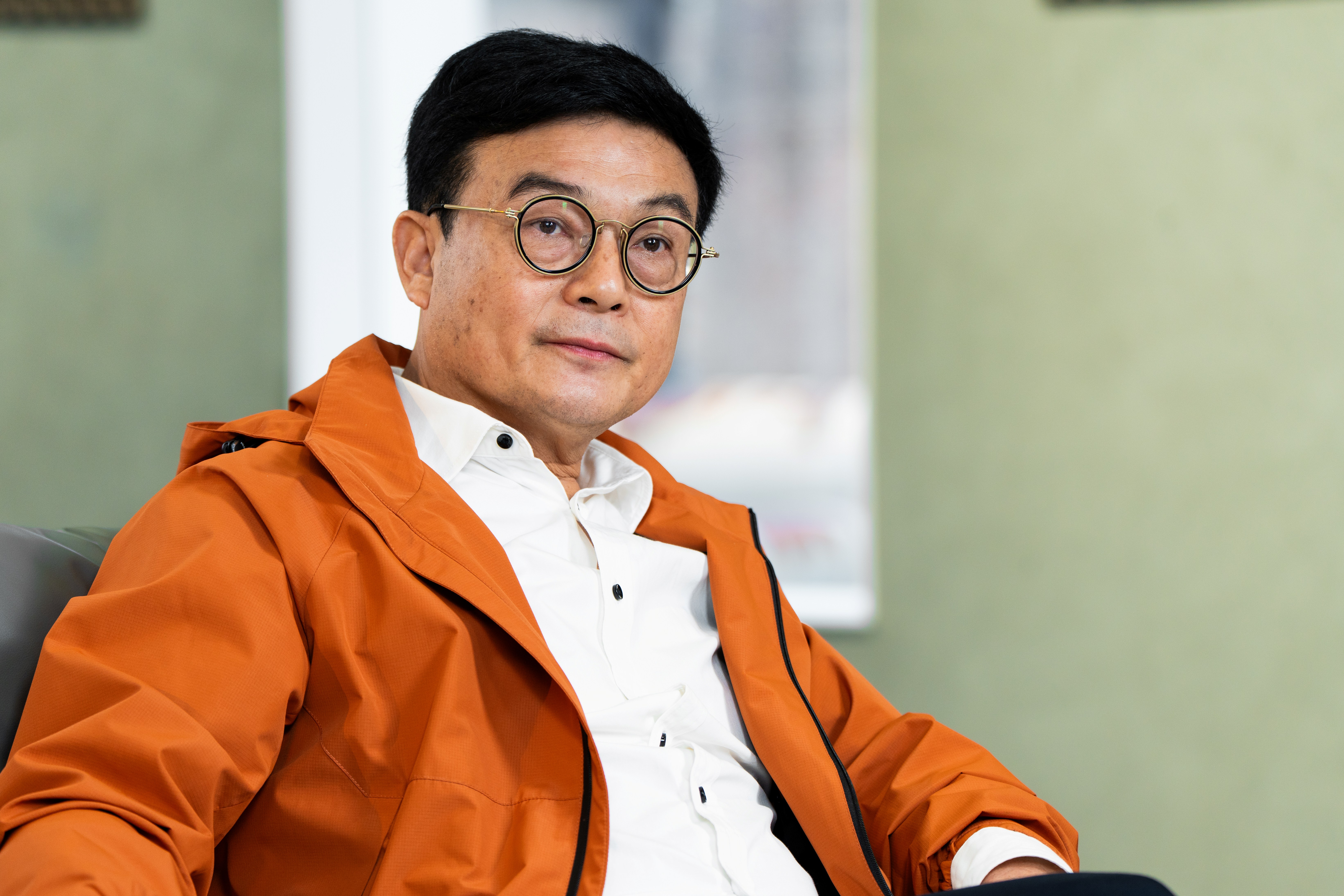
In our digital photography era, Li remains committed to artistic authenticity while constantly breaking through for a defamiliarized visual language. As he told SmallRig: "Photographers should never race against technology. We race against our era, against history. You have to record history, so history can remember you. That's why we always say: look back at history, stand in the present, and look toward the future.”
A Photographer Is a Director
“Does that mean photographers have no ideas and all we do is press a button?” Li challenged this stereotype emphatically during his SmallRig interview: “Photography is directing.”
While filmmakers arrange elements sequentially to show the story, photographers must instantly compose reality—people, landscapes, moments—into meaningful frames.
Li treats his subjects as actors, favoring those with strong ethnic features: “Their visual drama leaps through the lens.” Yet, all depends on the wisdom of the photographer, as well as the shooting angle, lighting and placement of subjects. In the process of making portraits, a photographer views the surroundings as a stage. So when the curtain opens, actors are telling their stories in silence.
Li’s most iconic work undoubtedly features elderly Yi people from Liangshan Mountains, though the shooting process wasn't without challenges. Preferring to avoid outside intrusion, the Yi people traditionally settle in high, remote and precarious locations. While culturally significant, this presented photographic difficulties.
Before the shooting, Li was often asked: “Can you really photograph there?” Despite language barriers, he found sincerity and friendliness readily gained subjects' acceptance.
One encounter made Li Fan's most unforgettable image. Entering a household, he met an elderly Yi man with a walking stick. Though deeply wrinkled, the man's refined bone structure made him “photogenic.” Seeing his muse, Li sat down to talk with him.
As they talked, Li instinctively pressed the shutter, creating this globally acclaimed image that earned him the lifetime achievement award at the Cannes Palais des Festivals. Two years later, presenting the photo to the old man's son, Li was told movingly: “My father has never been photographed in his life.” A profound sense of fulfillment washed over him.
This director’s thinking was also applied to the shooting project of Mongolians. Faced with uniform yurts, he noticed a cupboard. Drawing its curtain, he positioned a masked Mongolian before it with the mask representing history, a visible clock symbolizing time. This frozen history narrates Mongolian stories through time, the layered meanings Li embedded in the image.
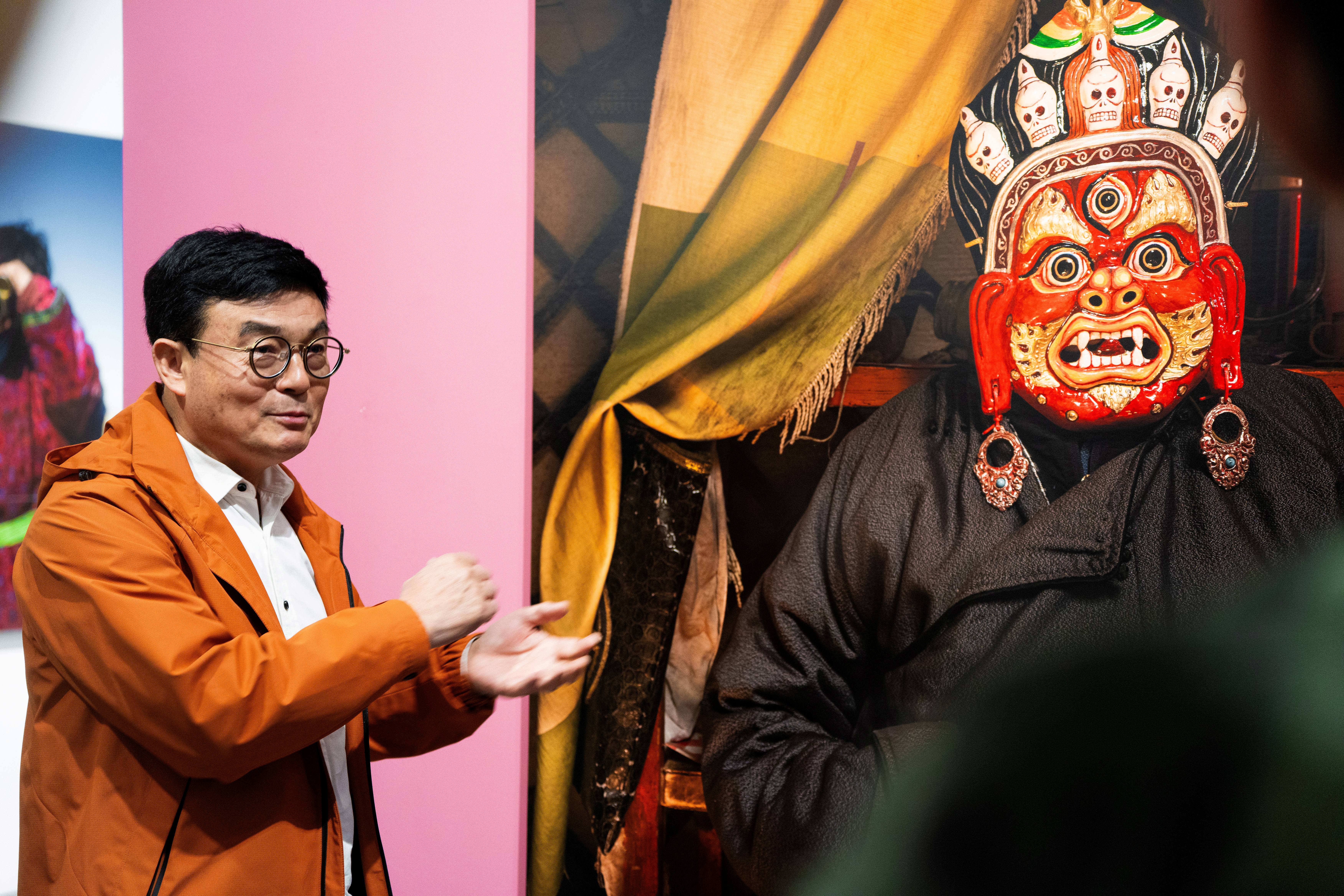
Aesthetician Teng Shouyao once commented: “Though captured instantaneously, these images reveal eternity; though presenting spatial subjects, they fuse with the temporal and historical dimensions of human expression and spirit. High technical mastery is required, but the photographer's humanistic cultivation and creative passion matter more than anything.”
Each photograph reflects Li's compassionate worldview. With what he called “persistent yet naive dedication,” he completed a modern Silk Road journey, preserving vanishing imagery from China's southwest and northwest. Recounting this, his hearty laughter filled the room as he proudly told SmallRig: “When measuring the earth with our feet, our lenses must keep up with the pace.”
Never Race Against Technology
Some histories exist in books we must read; others weathered by time we must witness firsthand. Photographing life means documenting history. Cameras extend beyond technology. They bridge dialogue between creators and the world.
From August 19, 1839, to the present, photography's 186-year evolution has seen technology completely transform traditional film methods. In this era of digital photography, has the craft become simpler or more challenging?
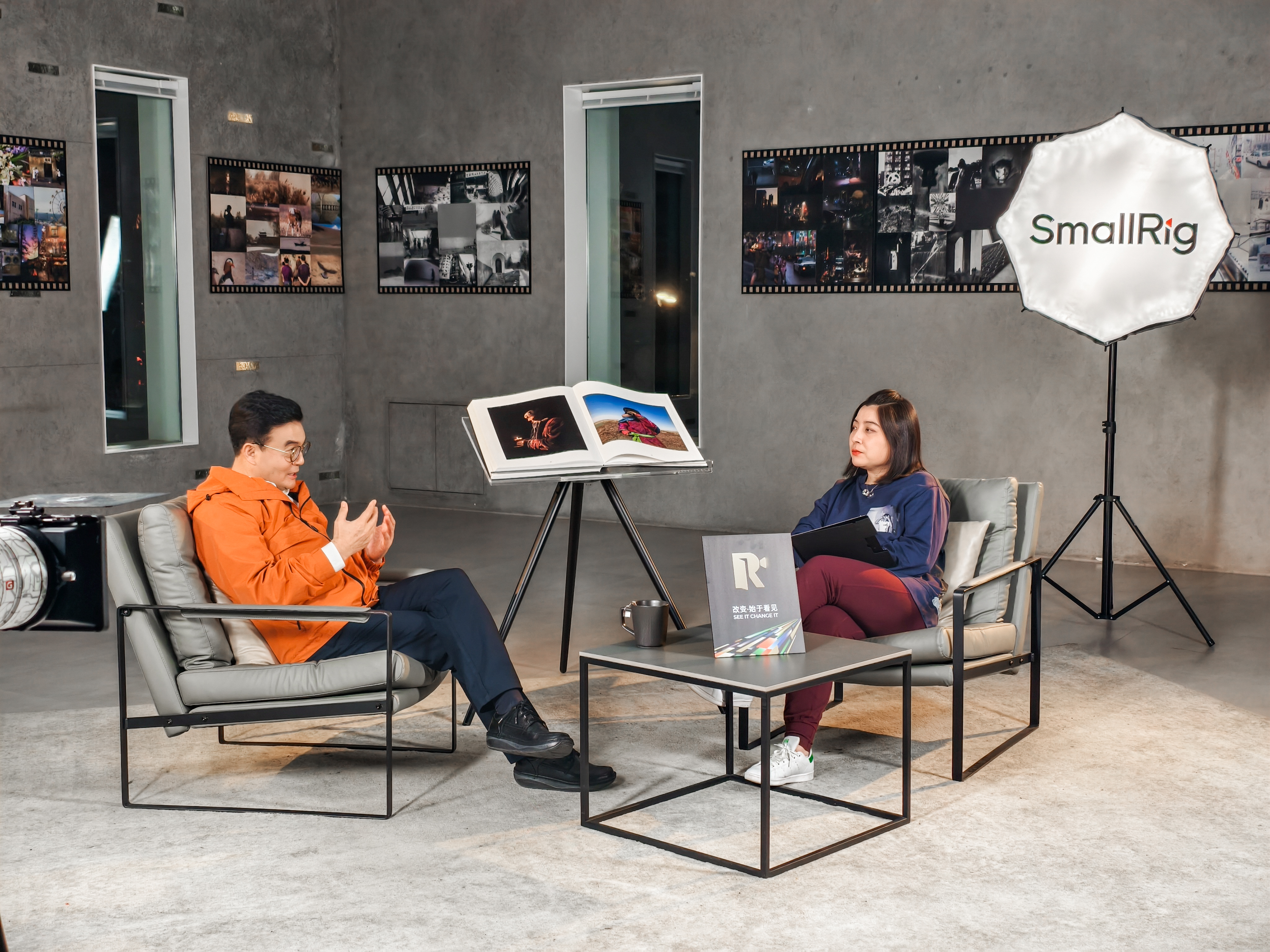
Faced with this question, Li shook his head: “Digital cameras made many photojournalists redundant and newspaper photography departments were decimated. Now everyone photographs, competing for that perfect shot. The challenge intensifies and photography's primary function has inevitably shifted from documentation to expression.” Yet while digital cameras allow instant review, they eliminate film's uncertainty.
In this democratized era, how should professionals combat anxiety to stand out? Li shared his philosophy: “Photographs are a universal language transcending borders. If an image speaks for itself, any explanation is redundant; if it doesn't, no amount of tearful elaboration helps.”
Exceptional images convey emotion, context and history. They are never confined by their frames. If an image is immediately comprehensible, then it’s a failure. A true masterpiece suggests entire worlds beyond its frame—a quality that stems solely from the photographer's cultivated vision and artistic depth. Photographers should not race against technology, but against time and history.
Seeing two children sharing binoculars, Li immediately had an idea of merging their perspectives into one frame while showing neither face nor expression, just bare arms reaching in. This expressionless hyper-metaphor contains profound emotion and interpretative possibilities.
As “Cao Gui Debates on War” states: “Initial momentum brings success; subsequent attempts weaken; third tries exhaust.” Likewise, Li believes only the first press captures the decisive moment. Like snipers, photographers must achieve perfect first shots.
After all, “the first shot live and the second shot dies as the subjects feel stiff when they noticed the camera. One shutter suffices. You make it or break it.” When subjects are unaware of cameras, they reveal their truest selves. That’s the essence of humanist photography.
Photography Has No Answers
Despite 45 years' accolades, including the Golden Statue Award (the highest prize) for China Photography, Li feels he's created nothing. In the interview with SmallRig, he describes his philosophy: “Photography offers no answers nor ultimate goals. One must continue to progress, explore and travel.”
Li values works with emotion, soul, vitality and imagination: “Images must radiate light while provoking thought, offering boundless inspiration.” He aspires to create society-shaping works like McCurry's Afghan Girl or Xie Hailong's Big Eyes. Such world-changing images demand lifelong dedication.
For Li, awards merely represent historical acknowledgments, a kind of recognition of one's work at a particular stage. Yet when viewed through the temporal lens, these honored photographs may not necessarily exert lasting historical influence, nor serve as pioneering works. It remains exceptionally rare for any image to become epoch-defining—let alone one capable of shaping national development or transforming cultural paradigms. With characteristic candor, Li shared with SmallRig: “As long as I haven't put the camera down, my best photo hasn't appeared yet.”
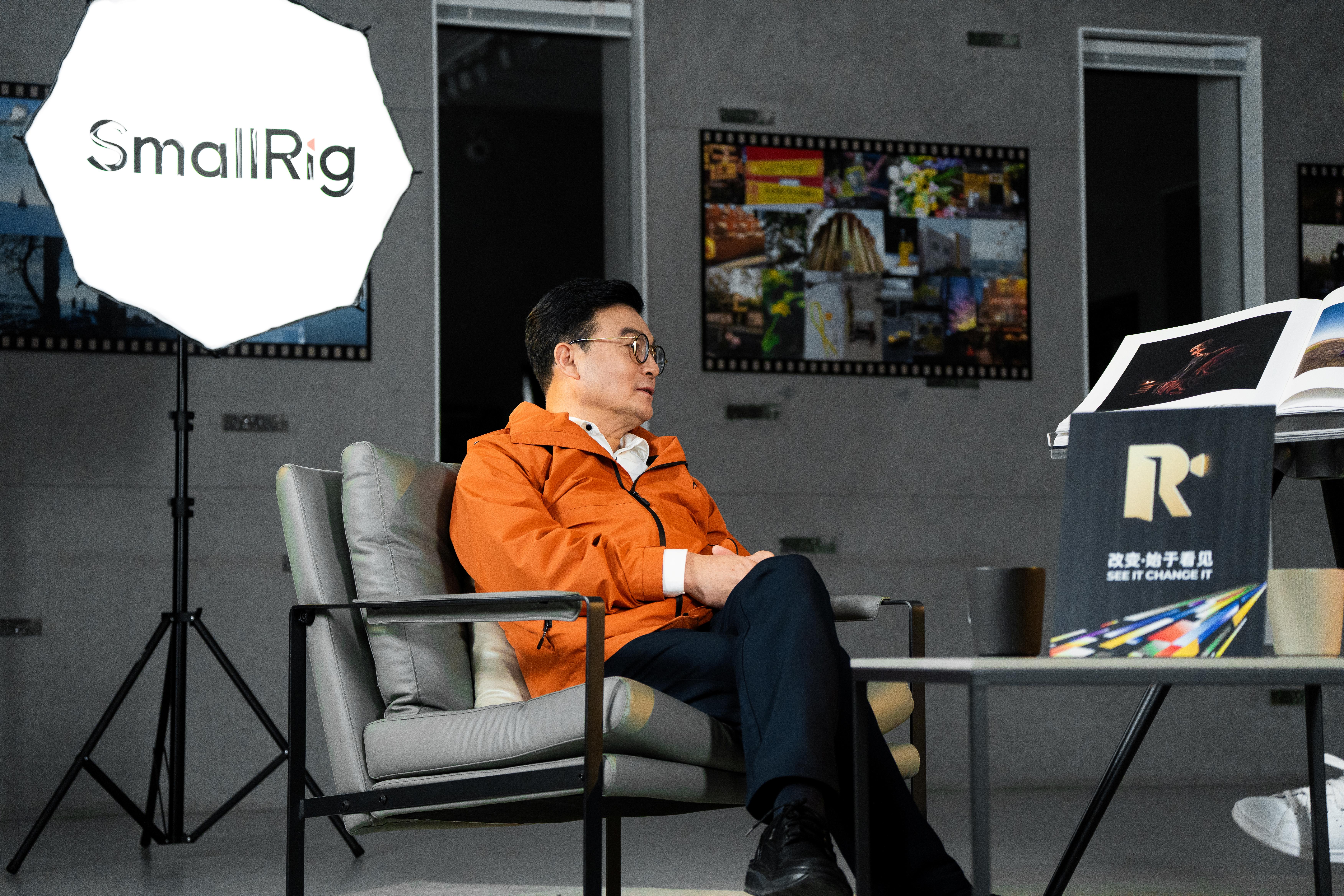
When discussing the relationship between technique and artistry, Li posits that technical mastery forms the essential foundation for artistic expression. However, he observes that contemporary photography instruction has largely degenerated into compendia of equipment manuals - where mastery of operational skills represents merely the starting point. True photographic excellence, he maintains, ultimately derives from the photographer's cultivated sensibility, intellectual framework, personal values, and lived experience.
Formal education in photography can only impart technical operations and historical context. Everything beyond constitutes uncharted territory demanding perpetual exploration. This self-directed learning process must remain a lifelong pursuit; every serious practitioner should master fundamentals through disciplined repetition, thereby imbuing finite existence with enduring value.
As both photographer and creator, Li kindly suggests that young practitioners should refrain from pontificating about art. As cultural superstructure, art possesses no intrinsic meaning—yet its greatest significance lies in transforming your lived experience, cultivating profound personal fulfillment. He urges the next generation to adopt a macroscopic perspective when considering what visual narratives future audiences will require.
In this era where boundaries between disciplines dissolve to enable richer modes of expression, photography must embrace radical interdisciplinary fusion as well. Only through such synthesis can our visual language evolve. Li exemplifies this ethos in his relentless pursuit of transboundary methodologies, consistently delivering groundbreaking visual innovations that challenge audience perceptions. After all, “artistry's greatest adversary is the hardening of creative thought into rigid patterns. True breakthroughs demand shattering these self-imposed constraints. This perpetual cycle of reinvention constitutes the exemplary photographer's relentless pursuit of excellence.”
Keep Reading
 Make Yourself the Methodology | ONSITE: Gu Xue Talks With SmallRig, Curator of the FamilyLens Exhibition
 Master Class - Chao Cewei
 Meet Thomas Chu | SmallRig On-site