
Search smallrig.com...


Xi Zhinong: Being Present Is a Photographer's Duty
MASTER CLASS 2025-12-04 05:16:06
Xi Zhinong: Being Present Is a Photographer's Duty
"As a photographer and a witness, I stand as a voice for the green peafowl. A photographer should always be present, whether on location capturing images or in court fighting for wildlife rights. Being present is my duty."
— Xi Zhinong
About Xi Zhinong
Global Wildlife Photographer, Founder of Wild China Film, The Only Chinese Photographer in the International League of Conservation Photographers (iLCP), The World's 40 Most Influential Nature Photographers.
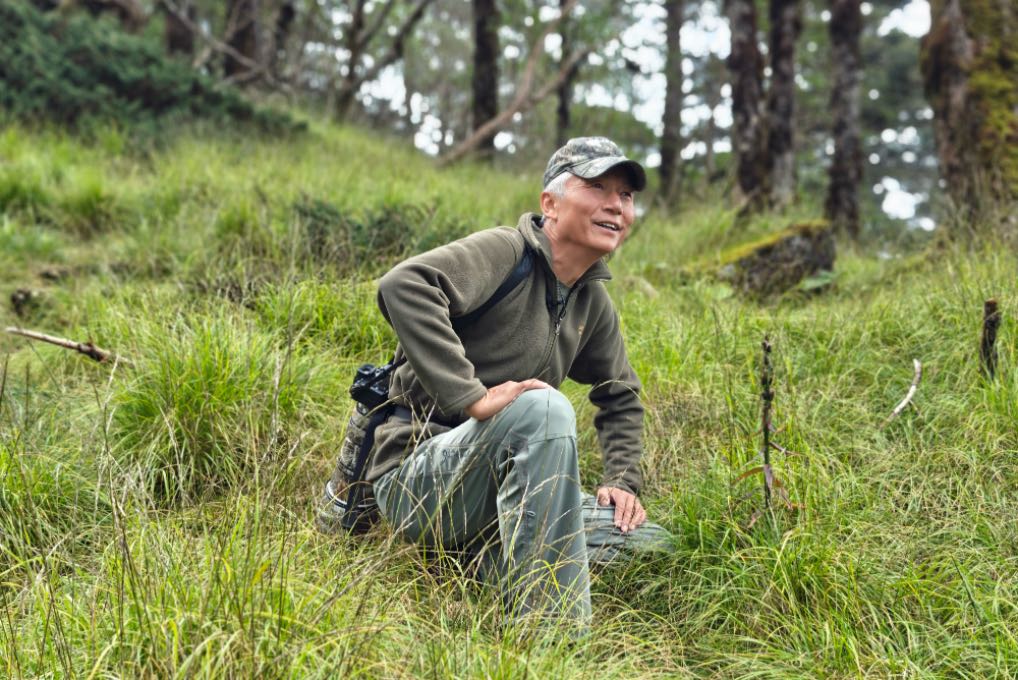
Over the past 40 years, Xi has earned countless international honors. In 2010, a British outdoor magazine recognized him as one of the world’s 40 most influential nature photographers. He is also the first Chinese photographer to win an award at the Wildlife Photographer of the Year and remains the only Chinese member of the iLCP.
From the film era to the digital age, as camera technology has evolved, the creatures captured through Xi's lens have become more vibrant than ever. He has witnessed, experienced, and contributed to the history of wildlife photography in China.
01
Career Beginnings
Migratory Bird Surveys & Photography Enlightenment
This photo looks really old. It was taken 42 years ago when I was just starting my photography career, out in the field doing a migratory bird survey with my teacher. It's actually one of the earliest wildlife images I captured.
Everyone knows China is a key stopover for migratory birds, as many come from Siberia and northern China, passing through to southern regions. In the early 1980s, my teacher and I went on these bird surveys and were also involved in shooting a film. That film was the first time I ever laid hands on a motion picture camera and a still camera. However, since the crew was shooting specimens by tying up birds, which felt unethical to me, I started learning photography on my own.
I once helped with scientific work, like putting leg bands on black-headed gulls. Back then, the bands were made of metal, but nowadays, researchers use radio trackers, including GPS devices, for migratory bird studies. Technology has come a long way, offering tools for science and photography that were unimaginable back then.
In 1990, I went to Yunnan to survey a newly discovered wintering habitat for the black-necked crane. Wearing a local leather-felt cloak, I shot photos of the cranes in the marshlands.
That same year, I worked as a temporary cameraman for [CCTV nature show] Animal World using a 16mm film camera. Unfortunately, a teammate didn't focus properly, so the footage came out blurry. But something's better than nothing, so I'm showing it here. Now, take a look at this photo—its focus is finally spot-on. Back then, we trekked into the Dulong River area with a movie camera to track wildlife, when there were no roads, and the journey took us four days. Now, there's a huge modern bridge, but back then, it was just a simple swinging bridge made of three steel cables, which shook a lot as you walked across it.
02
Three Years Chasing the Yunnan Snub-nosed Monkey
How Images Help Protect Nature
Time flies. I started my search for the Yunnan snub-nosed monkeys high in the snowy mountains at 4,800 meters. What I didn't expect was that the search would last three years, and that I'd only get two chances to actually film the monkeys in that whole time.
Back then, the equipment was bulky and heavy. If you look closely, you'll see that when I filmed the black-necked cranes, I used a split-unit camera—the recording unit was hidden inside a leather-felt cover. Even as the equipment became more integrated, it still weighed about 7 kilograms without the battery or tape. Now, our phones are super light, yet can shoot in 4K or even 8K. Technology has advanced beyond what anyone could have imagined.
Finding the monkeys meant tracking their droppings. Fresh ones were key. Unfortunately, the samples I had weren't fresh, so they didn't help much. Still, I showed them to give a sense of the search.
Through the Yunnan snub-nosed monkey, many people got to know not just the species but also the photographer behind the camera—me, Xi Zhinong. The photo on the left, Mother and Child, is one of China's most widely shared wildlife images across the globe. It's been featured in major international news magazines and marks a starting point for how images can help protect nature. Wild animals show love and family bonds, just like humans do. These feelings aren't unique to us.
China has endured painful lessons. So many of our ancient forests were cut down, and with them, we lost vital wildlife habitats. A lot of those forests were lost between the late 1960s and early 1980s. While searching for the monkeys, the most common vehicles on Highway 214 were trucks hauling timber. Today, you are most likely to see tourists' cars and high-speed trains reaching remote northwestern Yunnan.
This story is about a dominant male monkey who lost a competition and, lured by humans, was forced into their world. It's a long story, so I’ll save it for another time. But I hope to share it tomorrow.
03
Forest Protection in Action
The Birth of Green Camp
Back then, the stretch of old-growth forest behind me had already been slated for logging. It was this close to being cut down. I brought a crew from China Central Television (CCTV), filmed there, and did a report. I also wrote a letter to the central government. After the story aired on Xinwen Lianbo (China's national news program), the forest was saved. It was thanks to Mr. Tang's advice that I wrote that letter—and that eventually led to the founding of the College Students' Green Camp. It's been almost 30 years now. Over the past three decades, the Green Camp has been planting seeds of environmental awareness across the country. Maybe some of you here have taken part in the Green Camp. I can't say for sure everyone has, but I'm pretty sure some friends from Shenzhen definitely have.
04
The Tibetan Antelope Crisis
Poaching & Highway Threats
I've always tried to use my work to show China's wildlife to the world. This image here is from a National Geographic ad. Back in 2008, during the Beijing Olympics, National Geographic did a full special issue on China, and the snub-nosed monkey image appeared again.
Many people are familiar with the Tibetan antelope. In the late '90s, this species was heavily poached in the remote Hoh Xil region of the Qinghai-Tibet Plateau. Today, the population has recovered and the sound of gunfire is gone. But to truly understand what we've gained, we need to remember what we once faced. In June 1998, deep in the Altun Mountains, we came across 11 piles of antelope carcasses—89 female antelopes had been killed. That number doesn't even include their unborn or newborn calves. All I could do then was document it with my camera.
Tibetan antelopes, I always say, have one of the most dangerous love lives in the world. Sometimes it costs them their lives. This male here died after a fatal fight with a rival during mating season. It was late December 1997. My team and I were in Hoh Xil, and my nephew, the cameraman, captured the scene. At the time, I was working for Oriental Horizon. After returning to Beijing, I spoke to students at Peking University about the crisis. We worked with international organizations to spread awareness. That's the power of images. A single picture can say it all: just one shawl made of Tibetan antelope fur costs the lives of 3 to 5 antelopes. Later, I even helped create a children’s book to teach kids about this. Years later, I returned to Hoh Xil. Poaching had mostly stopped, but now roads had become the new threat. When antelopes try to cross, park rangers have to stop traffic so mothers can safely lead their young back to the grasslands. I captured that moment, too.
This was New Year's Day in 2010. The full moon on the 16th day of the lunar month was setting behind the mountains, and the first sunlight of the year lit up the Tibetan antelope in my lens. As a wildlife photographer, I couldn't have asked for a better New Year’s gift.
But not every moment is beautiful. Some are heartbreaking. This is a photo from a customs bust in Yunnan, where they seized piles of smuggled tiger skins —more than the number of tigers still alive in the wild in China at the time. I've always said: nowadays, no one needs to wear wild animal fur to survive the cold. No one needs to eat wild animal meat to avoid going hungry. There's simply no excuse left for consuming wild animals.
This was taken on the ridge of the Min Mountains, where I was lucky enough to capture a takin. As a wildlife photographer, moments like this—surrounded by a halo and rainbows—are truly unforgettable. Here in the Qinling Mountains, after a hailstorm, a takin peeked out from behind a rock. I've also had the chance to work with researchers to follow panda cubs growing up. And once, under a tree, I was lucky enough to film a playful 6-month-old wild panda. It even stuck its tongue out at me.
05
Saving the Green Peafowl
A Fight for Its Habitat
As a wildlife photographer, I believe it's my duty to document the damage humans are causing to animal habitats. This photo was taken in 2017 at a dam construction site in the Red River region of Yunnan. Shown here are the altitude and the exact time of the shoot. The dam closure was supposed to be completed that November, and if that had happened, the entire habitat of the green peafowl would've been flooded. Back then, our only way to speak out was through social media. So we posted on WeChat and Weibo, and that was the very first shot fired in the fight to save the green peafowl. In the end, the construction was halted, and the peafowl's home was saved.
This is a photo I took this March. You've probably seen peacocks before, but most of those are the blue Indian peafowl raised in captivity—or hybrids. The real green peafowl is depicted here. It's a national first-class protected species, and it's believed to be the original inspiration for the legendary phoenix in Chinese mythology. Historically, the green peafowl lived along all the major rivers in Yunnan. But sadly, they've disappeared from the Jinsha, Salween, and most of the Lancang River. Now, the Red River basin is one of their last remaining habitats. Thankfully, since the dam project was stopped, their numbers have started to slowly bounce back, from fewer than 500 birds in 2017.
As a photographer and a witness, I stand as a voice for the green peafowl. A photographer should always be present, whether on location capturing images or in court fighting for wildlife rights. Being present is my duty.
Keep Reading
 Master Class - Max Schleser
 The 14th International Smartphone Film Festival is co-presented by SmallRig, a global leader in innovative imaging solutions.
 Master Class - Gu Xue