
Search smallrig.com...


What’s The Best Height For A Video Tripod?
SmallRig 2025-12-08 04:50:37
Contents
The “best” height is simple: pick a video tripod that reaches your working eye level without raising the center column, then fine-tune for subject and scene. From there, match height ranges to how you travel and shoot, protect stability at taller settings, and read the spec sheet the right way. Below, you’ll find a practical path that keeps shots level, steady, and repeatable.
How Tall Should A Video Camera Tripod Be?
Choosing height starts with eye level, not a random number on a box. A video camera tripod that reaches your eye line without the center column will feel steadier, set up faster, and drift less on long takes.
Operator Height Baseline
Stand straight in the shoes you use on set. Your eye line is the real target. If a tripod meets that height with legs only, you’re in the safe zone. If it only reaches eye level by raising the column, expect more wobble, especially with pans and tilts.
Subject Eye-Level Reference
If you shoot interviews, the subject’s eyes matter more than yours. Measure where they sit or stand. A tripod that hits their eye line with legs extended (column down) lets you frame fast, keep horizons honest, and match A/B cameras without fighting the column.
Center Column Vs. Leg Sections
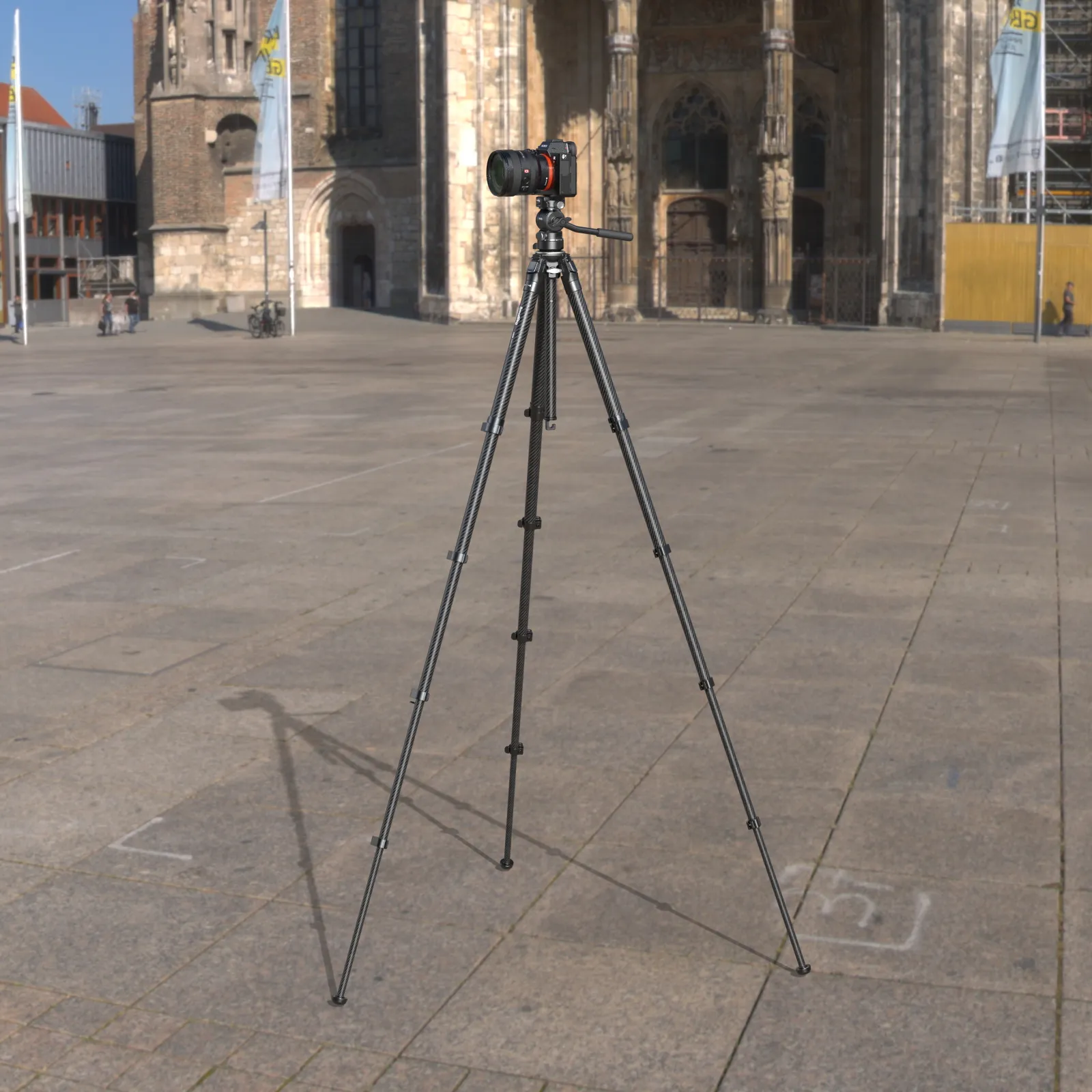
Use legs for height, the column for small tweaks. Every centimeter you extend the column trades stiffness for convenience. Push height into the leg sections first; save the column for 1–2 inches of micro-adjustment.
Indoors Vs. Outdoors Differences
Indoors, you can run a little lower for headroom, ceilings, and lights.
Outdoors, you often need more height for crowds, uneven ground, or horizon control. Plan for the taller case—then your indoor setups are easy.
For most jobs, “eye level with no column” is the target. Everything else is a compromise you choose on purpose.
What Height Ranges Work Best In Tripods For Video?
Different jobs require different working heights. Tripods for video should cover a compact low, a quick mid, and a confident high—without turning into a noodle at the top.
Travel/Compact Heights
If you fly or hike a lot, prioritize a shorter folded length and a lower minimum height that still clears tables and railings. Compact doesn’t have to mean flimsy: favor fewer, thicker leg sections over many skinny ones.
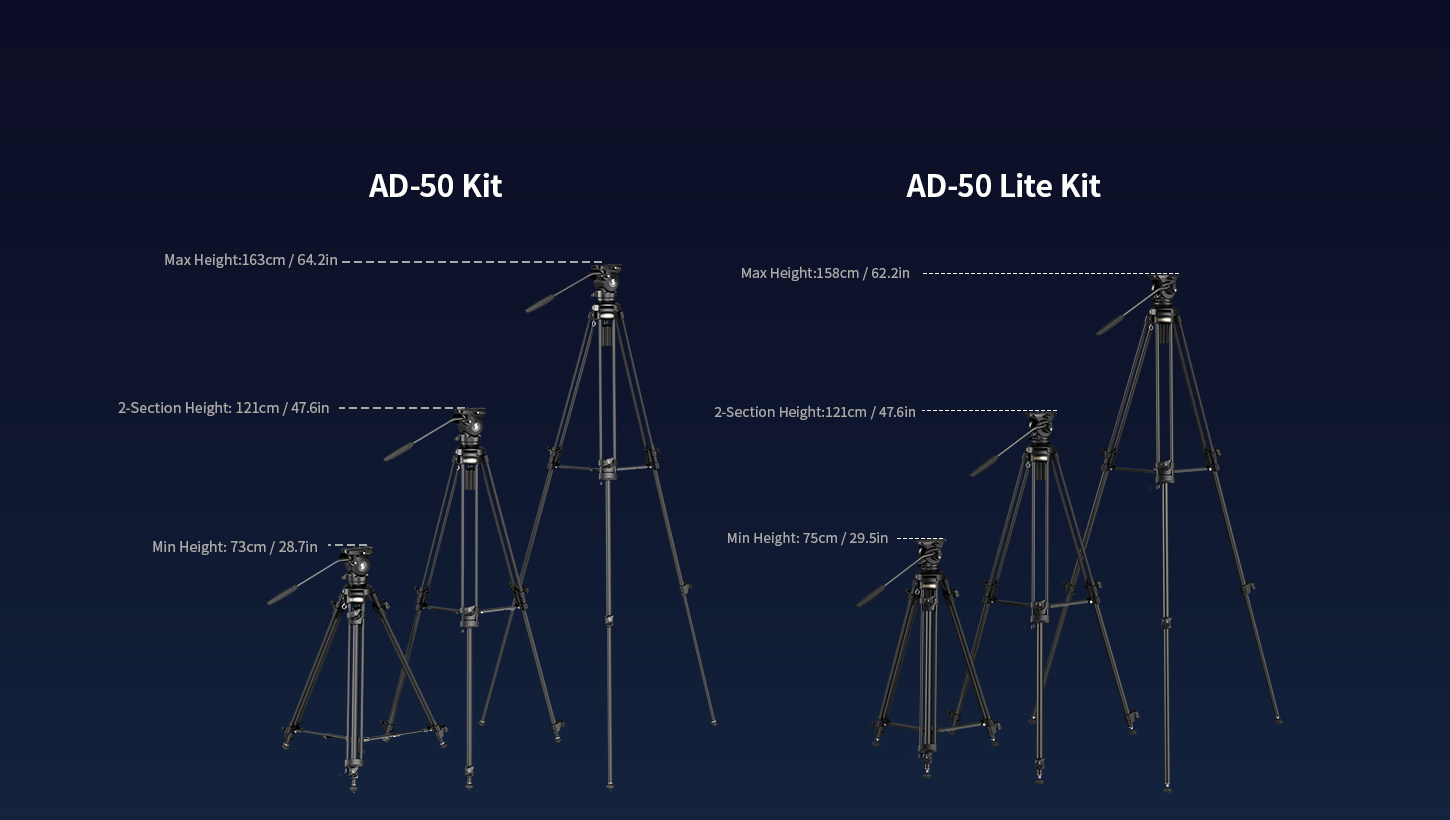
For a “lightweight + travel-friendly” option, consider the SmallRig AD-50 Lightweight Carbon Fiber Video Tripod Kit (≈73–163 cm working height, detachable fluid head, about 2.8 kg), which packs fast and suits travel shoots with mid-weight video rigs.
Run-And-Gun Mid Heights
For events, doc, and ENG, mid-height is your bread-and-butter. You’ll carry at this height, move at this height, and reframe at this height. Choose a tripod that hits chest-to-eye level fast with reliable leg locks and a leg spreader you trust.
For a typical event-ready setup, something like the SmallRig Heavy-Duty Fluid Head Tripod AD-01, with a working height of 85–186 cm, an 8 kg tripod load capacity, and a 4 kg aluminum double-tube build, shows how mid-height speed can coexist with serious support.
Low-Angle Minimum Heights
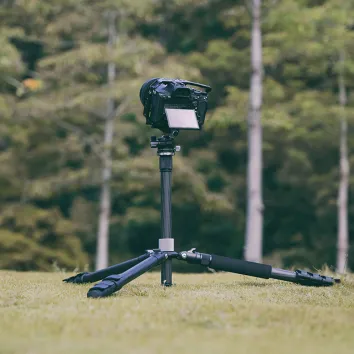
Low shots sell speed, scale, and drama. A useful minimum height means the legs can splay wide, the head can level quickly, and your rig stays off the dirt. A simple ground-level adapter or hi-hat option is a bonus.
Overhead Maximum Heights
For over-crowding or for stage coverage, a solid maximum height matters. Look for real stiffness at the top setting, not just a big number in the spec sheet. If your tallest height still feels controlled during a slow pan, you picked well.
Cover your three daily stops—low, mid, and high—and make sure the “high” is actually usable, not only printable on a brochure.
How Does Camera Tripod Height Affect Stability And Image Quality?
Tall is harder to steady. A camera tripod that stays rigid at working height protects sharpness, head moves, and focus pulls—especially with heavier builds.
Leg Section Count And Rigidity
Fewer sections = thicker tubes = more stiffness. If you need lots of height from many thin sections, expect more flex. If you value stability, accept a slightly longer folded length for stronger legs.
Bowl Heads Vs. Flat Base Stability
A bowl (75/100 mm) lets you level the head without fighting leg lengths—critical when you’re tall and time-pressed. Flat bases can work, but bowls make fast, repeatable, level frames far easier on uneven ground.
Center Of Gravity With Long Lenses
Long glass, teleconverters, camera cages, and monitors raise the center of gravity. At taller heights, that extra leverage shows up as shake. Use a sturdier set of legs, keep the column down, and balance the head with the camera’s plate range.
Wind, Terrain, And Feet Choices
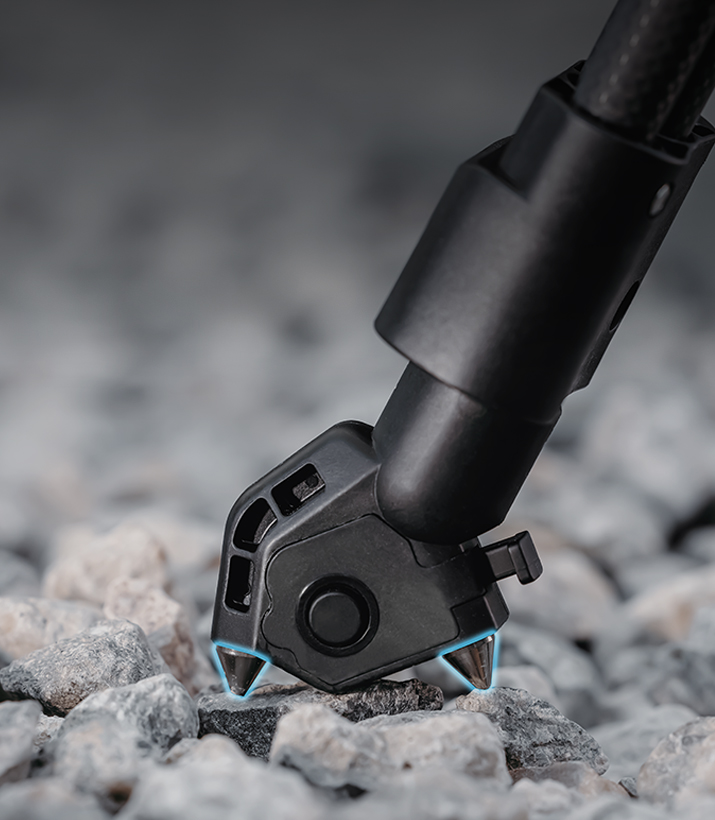
Wind and soft ground attack tall setups first. Spread the legs wider, lower one section if you can, and use the right feet—rubber on floors, spikes on dirt. A small sandbag on the apex adds calm without crushing portability.
Height magnifies every weakness. Build stiffness into legs, leveling, balance, and footing before you crank taller.
How to Choose A Professional Camera Tripod Height From Specs?
Spec sheets can be noisy. Read them like a checklist, and you’ll land on a professional camera tripod that works on day one.
Minimum Height (Low/Tabletop/Macro)
A real minimum height means splayed legs and a workable head angle, not just a marketing number. If you do product or food, this spec saves your back and your schedule.
Maximum Height (Eye Level/Column Down)
This is the headline: Can the tripod hit your eye line or your subject’s eye line with the column down? If so, your tallest real-world shots will also be your steadiest.
Folded Length (Bag/Cabin Fit)
The gear you leave at home doesn’t help you. Match folded length to your bag, locker, or carry-on rules so the tripod actually travels with you.
Payload Rating At Max Height
Look past the “max payload” in big print and check performance at tall settings with your heaviest rig. If possible, test with your real camera, lens, and accessories.
Body/Lens Matching (Light Vs. Heavy Rigs)
Mirrorless with a short zoom can live on leaner legs. Long-lens sports, wildlife, or cine builds need stouter tubes and a bigger bowl. Fit the legs to the lens, not only the camera body.
Use-Case Flags (Studio/Interview/Stage/Doc/Live)
Studios want repeatable eye lines and teleprompter clearance. Interviews need quick matching of heights for A/B angles. Stages need a steady “over-crowd” setting. Docs need fast mid heights and a compact low. Let your real jobs pick the height.
Specs are clues. If the tripod clears your eye line without the column, packs into your bag, and holds your rig steady when tall, you have found the right height.
FAQs about Video Tripod Height
Q1. How Do I Test the Right Video Tripod Height Before Buying?
Bring your camera, usual shoes, and a typical lens to a store or rental house. Set the legs to reach your eye line with the column down, then do three checks:
-
slow pan at max working height—look for bounce;
-
quick reframes at mid height—listen for leg locks slipping;
-
low-angle setup—confirm you can splay the legs and still level the tripod head.
If all three feel controlled and repeatable, that height range will cover most jobs you do now.
Q2. Does Carbon Fiber Make Tall Tripod Shots Steadier than Aluminum?
Carbon fiber is not “magic,” but its tube structure damps high-frequency vibration better than aluminum at the same diameter. That helps when you’re tall, outdoors, or shooting on surfaces that transmit buzz. Aluminum can be just as stable if the tubes are large and the locks are strong; it’s often heavier and cheaper. If you often run at max height or in wind, carbon’s damping plus smart technique (column down, wider spread, sandbag) pays off.
Q3. How Do I Match Two Tripods for Consistent Interview Eye Lines?
Set both to leg-only eye level for your seated subject, lock bowl heads level, and mark each leg with tape or a paint pen at that exact extension. Label the marks “Interview.” Next time, deploy to those marks first, then micro-adjust with the bowl. If you change chairs or talent, make new marks. This takes minutes once and saves time every shoot, especially when you swap rooms or reset after breaks.
Conclusion
Pick a video tripod that hits eye level on legs alone, stays stiff at real working height, and folds short enough to go everywhere with you. Read specs with your rig in mind, not in a vacuum, and favor stability over “tall on paper.” Ready to lock in a dependable setup? Choose height for eye line, stiffness for the top setting, and a folded length you’ll actually carry—then go make clean, level pictures.
Want an all-in-one answer for “eye-level height + tall-setup stiffness + fast leveling”? Visit SmallRig’s global site and look at systems like the FreeBlazer Heavy-Duty Carbon Fiber Tripod Kit 3989, the Heavy-Duty Fluid Head Tripod AD-01 (85–186 cm working height, 8 kg tripod load, 4 kg net weight), and the Video Head with Leveling Base CH20 (about 350 g with up to 4 kg support), then match them to your camera load and shooting style for a steadier, faster workflow.
Keep Reading
 Carbon Fiber vs. Aluminum Camera Tripods: Features, Advantages, and More
Related Products from SmallRig