
Search smallrig.com...


SmallRig Best Carbon Fiber Tripods 2026: AP-10, AP-20, TRIBEX & FreeBlazer Buying Guide
SmallRig 2026-08-11 02:10:49
Contents
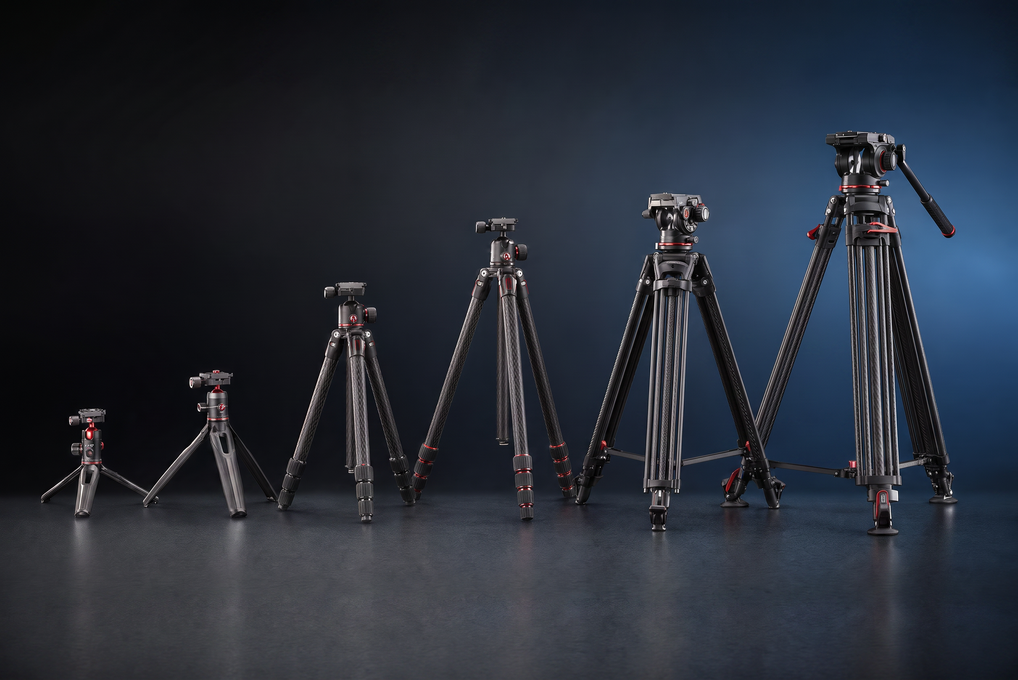
If you've ever left your tripod at home because it was too heavy to justify, you already understand the core problem with most tripods.
It's not that they don't work. It's that a tripod you don't bring doesn't help. The golden hour shot you had in mind, the mountain sunrise you hiked two hours to reach, the long exposure cityscape that needed a completely still camera — all of it depends on a tripod actually being with you when the moment arrives.
Carbon fiber is the answer most serious photographers and videographers eventually arrive at. At the same weight as an aluminum tripod, you get a stiffer material that vibrates less — meaning sharper long exposures and less leg flex under a heavy lens. Or at the same stiffness, you get something 30–40% lighter — meaning you actually bring it. Carbon fiber also handles temperature extremes that aluminum doesn't: in winter, aluminum legs become painfully cold to touch within minutes; in summer heat, they're too hot to grip. Carbon fiber stays close to ambient temperature and remains comfortable from -10°C to 40°C.
SmallRig makes carbon fiber tripods across five distinct use cases. This guide explains what problem each one is built to solve, and which one belongs in your kit.
Why the Right Carbon Fiber Tripod for Your Scene Matters
A tripod isn't a tripod in the same way a camera isn't a camera. A wedding cinematographer and a landscape photographer and a product studio creator all need a stable platform — but they need it to do fundamentally different things.
The wedding cinematographer needs to deploy fast, pan smoothly, and be ready for the next setup within seconds. A slow-to-extend tripod costs them shots. The landscape photographer needs to get low to the ground, hold still through a 30-second exposure, and weigh as little as possible for the five-kilometer hike to the location. A heavy tripod costs them energy and possibly the trip itself. The product creator needs a compact footprint on a desk, high load capacity for a tethered camera setup, and no floor space consumed.
Each of these requires a different engineering answer. SmallRig's carbon fiber lineup is organized around exactly these differences.
Best SmallRig Carbon Fiber Travel Tripods for Photographers
The scene: You're packing for a trip. The camera bag is already at carry-on limit. The tripod needs to earn its place — which means it has to be light enough not to be the thing you leave behind, stable enough to hold a mirrorless body with a telephoto lens through a multi-second exposure, and compact enough to fit without reorganizing everything else.
Most aluminum tripods at this weight class flex under load. Most tripods at this stiffness class weigh too much. Carbon fiber at travel weight is the only material that solves both sides at once — and that's exactly what the AP-10 and AP-20 are built around.
SmallRig AP-10 Carbon Fiber Tripod (4060) Review: Best Ultralight Option
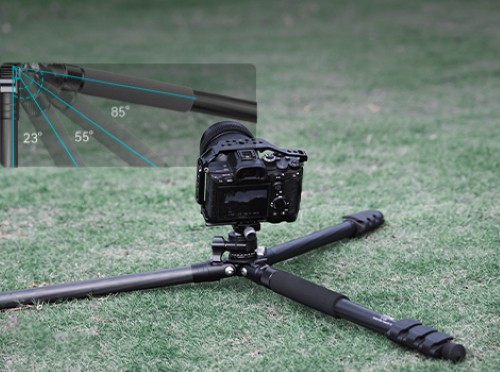
The AP-10 exists for one reason: to be the lightest capable carbon fiber tripod in the SmallRig travel lineup.
At 1.2kg (2.6 lbs), it's built for the photographer who genuinely counts grams. Four-section legs with quick-release flip locks extend to a maximum height of 133cm and fold down to just 54cm when collapsed — compact enough to fit alongside other gear in a carry-on without rearranging everything. Three adjustable leg angles let you shoot at standard height, medium low, or near ground level depending on the terrain.
The ball head swivels 360° and tilts 90° with a 360° horizontal scale for accurate panoramic positioning, and carries up to 8kg — enough for a mirrorless body with a mid-range zoom or telephoto prime. An Arca-Swiss compatible quick-release plate is built in. Three 1/4"-20 threaded holes on the legs give you accessory attachment points without a separate adapter.
One leg detaches and extends as a monopod or hiking pole — a feature that earns its keep on trails where a tripod is too wide but additional stabilization helps.
What it doesn't do: The AP-10 has no center column. Maximum height is 133cm, which is below eye level for taller shooters. It also doesn't support column reversal for low-angle or macro work. If either of these matters for your shooting, look at the AP-20.
AP-10 is the right choice when: You're optimizing purely for minimum weight and packability, your subjects don't require shooting above 133cm, and your lens-camera combination stays within the 8kg head limit. Every gram counts and the monopod conversion adds genuine trail utility.
SmallRig AP-20 Carbon Fiber Tripod (4059) Review: With Center Column
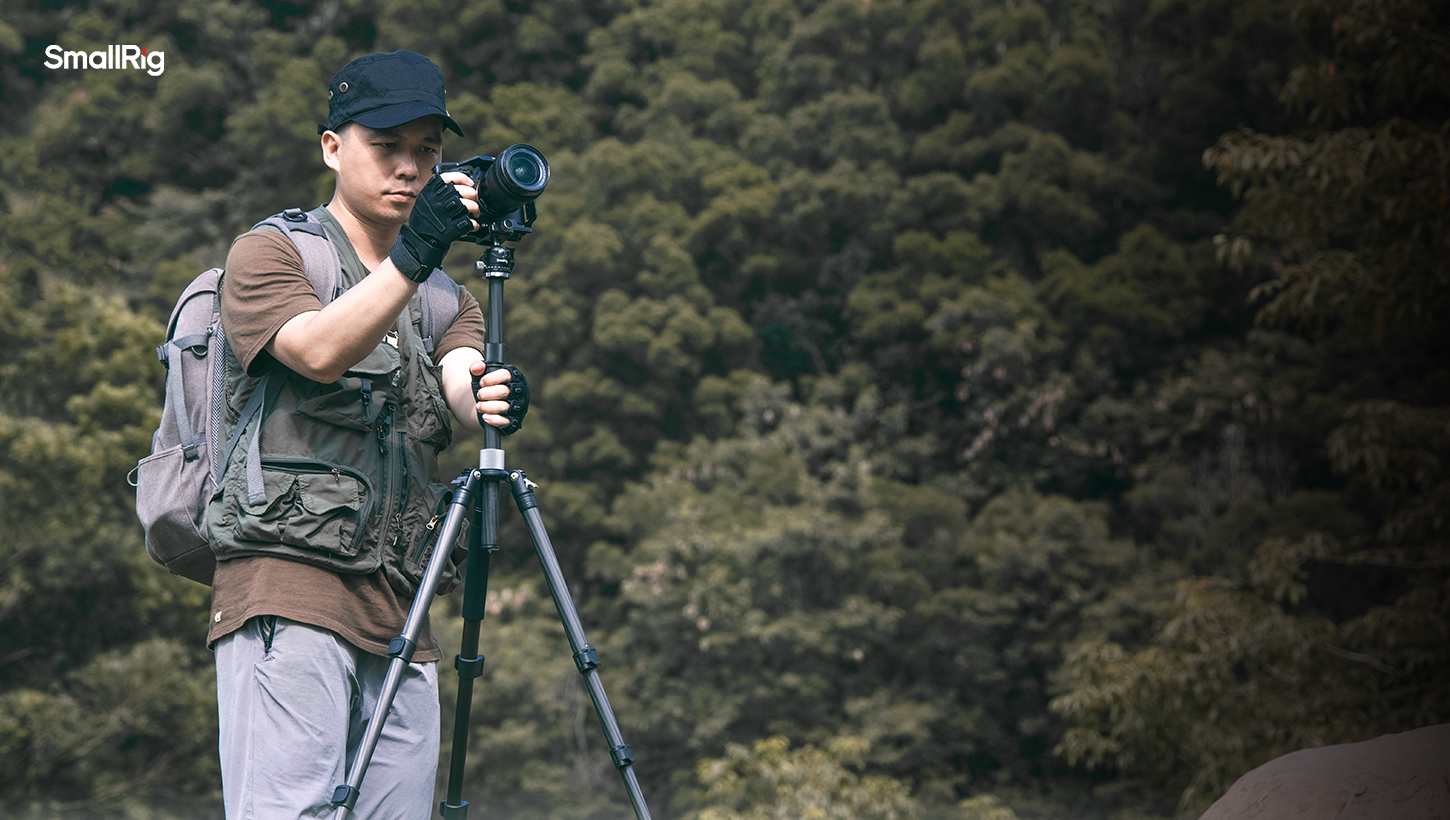
The AP-20 is the AP-10's direct sibling — same carbon fiber construction, same four-section legs, same monopod conversion, and nearly the same carry weight at 1.25kg (just 50g heavier than the AP-10). On a hike, that 50g difference is imperceptible.
What's different is what the center column adds, and it changes the AP-20's capability in three meaningful ways.
First, maximum height rises to 158cm — 25cm taller than the AP-10, which is enough to bring most shooters to a comfortable eye-level position without crouching. Second, the center column reverses for low-angle work: flip it downward and the camera can be positioned just centimeters from the ground for macro, flat-lay food photography, or low-perspective landscape shots that simply aren't available on the AP-10 without inverting the entire tripod. Third, three adjustable column angles give you fine height tuning between full leg extension and ground level, rather than being locked to whatever the legs reach.
The ball head also carries more — rated to 10kg versus the AP-10's 8kg — which matters if your kit includes heavier telephoto lenses or a cage setup.
AP-10 vs AP-20 — the direct comparison:
| AP-10 | AP-20 | |
| Net Weight | 1.2kg | 1.25kg |
| Max Height | 133cm | 158cm |
| Min Height | 54cm | 44cm |
| Center Column | ✗ None | ✓ Reversible, 3-angle |
| Low-Angle / Macro | Limited | ✓ Column reversal |
| Head Load | 8kg | 10kg |
| Leg Load | 12kg | 12kg |
| Monopod Convert | ✓ | ✓ |
| Ball Head Scale | 360° | 360° horizontal scale |
AP-20 is the right choice when: You need to shoot above 133cm regularly, you do any macro or low-angle work that benefits from column reversal, or your lens-camera combination pushes toward the 10kg head limit. The 50g weight difference over the AP-10 is negligible for what you gain.
Best SmallRig Carbon Fiber Video Tripods for Filmmakers
The scene: You're not just holding a camera still — you're moving it. Pan across a stage, tilt down from a speaker's face to their hands, follow a subject through a space. Video requires controlled, smooth movement during the shot, which means a ball head (designed for static positioning) isn't the right tool. You need a fluid head with adjustable damping so your movements feel deliberate rather than mechanical, and counterbalance so a heavy camera doesn't tip when you release the handle.
The bigger the rig — camera body, cage, monitor, wireless receiver, follow focus — the more precision you need from the head, and the more stability you need from the legs. Carbon fiber delivers legs that stay still at higher payloads than equivalent aluminum legs, which is why professional video tripods increasingly use carbon fiber as the default material.
SmallRig TRIBEX CARBON II Carbon Fiber Tripod Kit (5755) Review: Fastest-Deploying Video Tripod
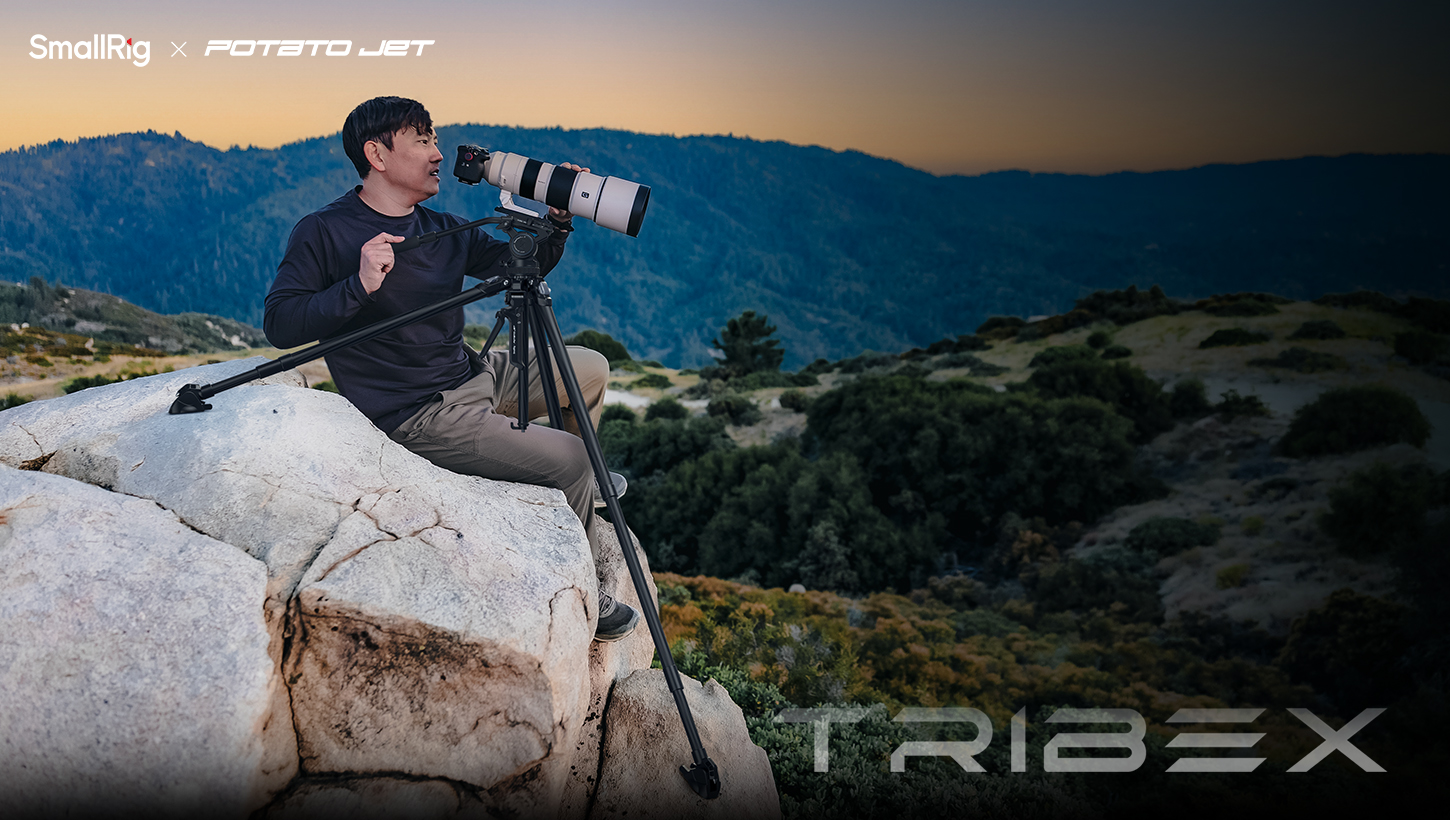
The TRIBEX was built to answer a question most tripod manufacturers hadn't asked: why does setting up a tripod require multiple steps per leg?
A conventional tripod extends each leg section individually, tightening a lock at each stage. On a three-section leg, that's three steps per leg, nine steps total, just to get to full height — before you've leveled, attached the camera, or touched the head. The TRIBEX replaces this with the X-CLUTCH: a patented hydraulic mechanism that extends all leg sections simultaneously with a single squeeze of one lever. Every section deploys in under a second and locks automatically at full extension.
This isn't a marginal convenience. For a wedding cinematographer who sets up and breaks down eight to twelve times across a reception, or a documentary crew moving between locations, the time saved compounds across an entire shoot day. More importantly, it means the tripod is ready when you are — not three minutes after the moment passed.
The 5755 is the TRIBEX CARBON II kit — winner of the Red Dot Design Award, International Design Excellence Awards (IDEA), and Golden Pin Design Award. Full carbon fiber build on both legs and center column supports 25kg on the legs. The Dynamic Balance Fluid Head handles 8kg payload with 6kg adjustable 4-step counterbalance and stepless pan/tilt damping. Height range extends from 27cm (center column detached, for ground-level shots) to 168cm at full extension. Folded length is 79cm. The tripod itself weighs 2.6kg; the full kit including head weighs 3.8kg. Flat feet with built-in metal spikes adapt to indoor and outdoor surfaces without swapping components.
5755 is the right choice when: Your shoot involves frequent movement and redeployment. You're a wedding cinematographer, event videographer, documentary shooter, or run-and-gun creator who needs to be set up before the moment happens — not after.
SmallRig FreeBlazer AD-Pro8 Carbon Fiber Video Tripod Kit (4465) Review: Best for Precision Video Work
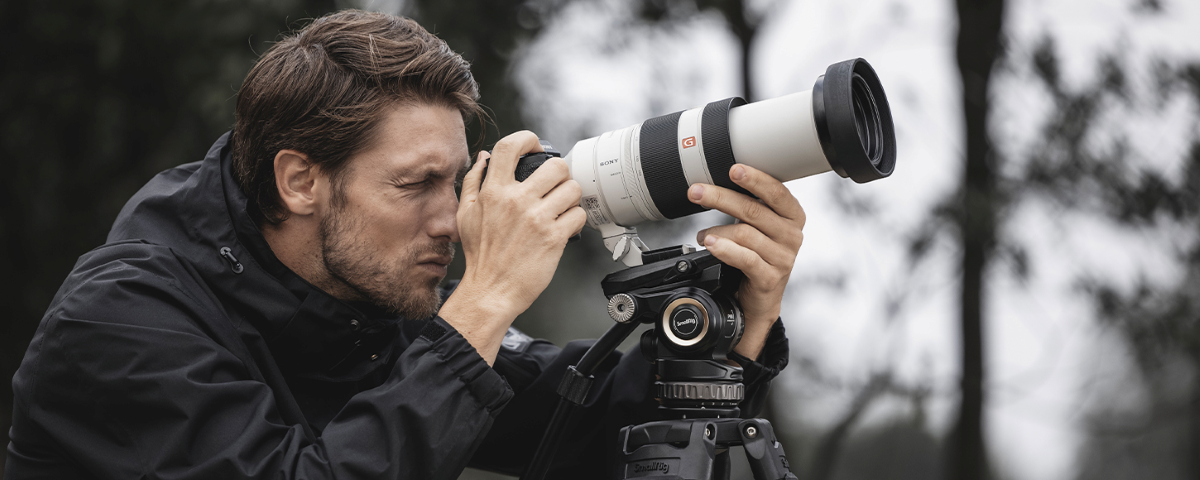
Where the TRIBEX is designed around the speed of getting into position, the FreeBlazer AD-Pro8 is designed around the precision of what you do once you're there.
The 4465 won the IF Design Award 2024. It takes a different approach to professional video stability: instead of hydraulic leg deployment, it uses a one-step flip lock on each leg that extends and retracts faster than a conventional multi-step lock, without the mechanical complexity of a hydraulic system. Height range is 58cm to 196cm — the tallest in SmallRig's carbon fiber video lineup, reaching nearly two meters for overhead and high-angle work that the TRIBEX's 168cm maximum can't reach. Folded length is 97cm. Total kit weight is 5.8kg.
The fluid head is where the AD-Pro8 makes its case. A 6-step counterbalance system covers camera rigs from 1kg to 8kg — a wider and more precise adjustment range than the TRIBEX's 4-step system, dialing in balance for everything from a bare mirrorless body to a fully-loaded cinema configuration. Four-step hydraulic damping controls pan and tilt independently (pan: steps 1–4; tilt: steps 0–3), so you can set different resistance on each axis for different shot types. The Touch-and-Go quick-release plate locks without requiring alignment — place and press, which matters when you're working quickly between setups.
Included accessories cover both a ground spreader and a mid-level spreader (interchangeable depending on terrain), flat and spike feet, a telescopic handle that attaches left or right, and a custom carrying bag.
TRIBEX 5755 vs FreeBlazer 4465 — which video tripod?
| TRIBEX CARBON II (5755) | FreeBlazer AD-Pro8 (4465) | |
| Leg Deployment | X-CLUTCH hydraulic, one second | One-step flip lock per leg |
| Max Height | 168cm | 196cm |
| Min Height | 27cm (column detached) | 58cm |
| Folded Length | 79cm | 97cm |
| Tripod Weight | 2.6kg | — |
| Kit Weight | 3.8kg | 5.8kg |
| Head Payload | 8kg | 8kg |
| Counterbalance | 4-step, up to 6kg | 6-step, 1–8kg |
| Pan/Tilt Damping | Stepless | 4-step independent |
| Leg Load | 25kg | 15kg |
| Awards | Red Dot, IDEA, Golden Pin | IF Design Award 2024 |
| Best For | Fast-paced, multi-setup shoots | Controlled, precision video work |
One-line version:
-
5755 TRIBEX — Set up in one second. Shoot. Move. Repeat.
-
4465 FreeBlazer — Set up precisely. Tune every parameter. Shoot for hours.
4465 is the right choice when: You work in controlled or semi-controlled video environments — documentary interviews, corporate video, broadcast, studio shoots — where you set up once and need precise, repeatable fluid movement across the whole session. The 6-step counterbalance, independent axis damping, and 196cm maximum height give you more tuning range than any other SmallRig carbon fiber tripod.
SmallRig Carbon Fiber Tabletop Tripod: 5025 vs 5026
The scene: You're not going anywhere. The camera is on a desk, pointed at a product, a face, or a flat lay. You need stability, a small footprint, and the confidence that a fully tethered camera with accessories attached isn't going to tip. You don't need the tripod to fold to 54cm — you need it to sit cleanly on a 60cm desk without taking up the whole surface.
The desktop tripod category exists because a full-size tripod in a studio or at a desk creates more problems than it solves: legs spread wide across the floor, minimum height too tall for tabletop subjects, overkill for a controlled environment where the camera isn't moving between shots.
SmallRig makes two carbon fiber tabletop tripods. They look similar and share the same design language, but serve different weight requirements.
SmallRig Carbon Fiber Pocket Tripod 5026
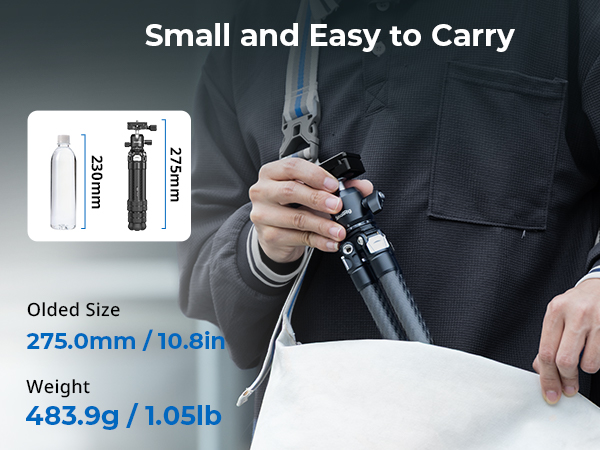
The 5026 is the portable option. At 0.48kg, it's light enough to carry in a backpack side pocket or hold with one hand while setting up. Working height ranges from 275mm to 395mm — compact enough for tabletop product shots, flat-lay food photography, or a close-to-desk vlogging setup. Load capacity is 5kg overall, with 3kg on the ball head.
The foot tips are detachable silicone caps with hidden metal spikes underneath — silicone for desk and indoor surfaces to prevent scratching, spikes exposed for outdoor ground use when you need the tripod on grass or gravel.
SmallRig Heavy Duty Carbon Fiber Tabletop Tripod 5025
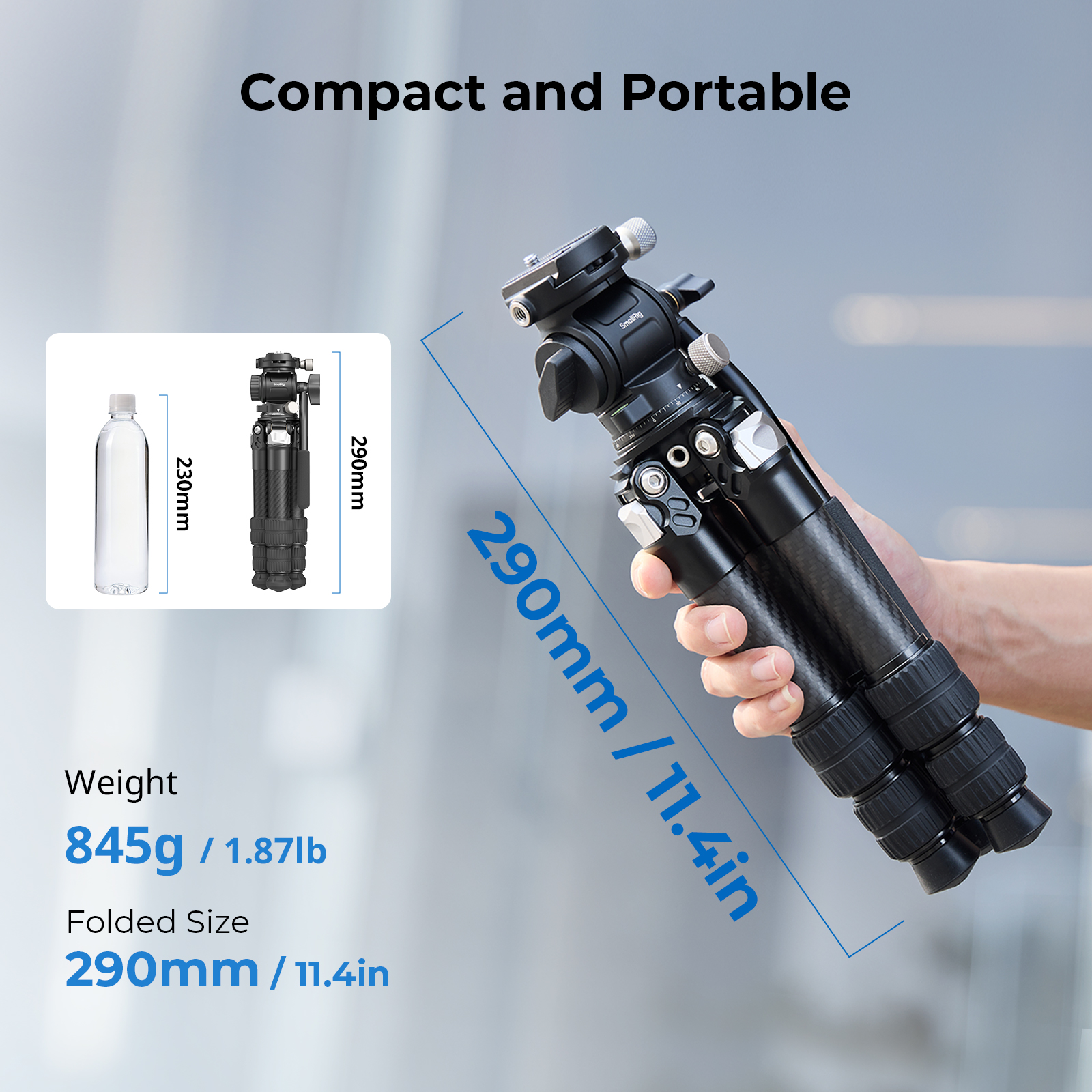
The 5025 is the capable option. Same working height range of 275mm to 395mm, same compact footprint — but carbon tubes up to 25.5mm diameter for greater rigidity, and a 10kg load capacity that doubles the 5026's ceiling. A 3/8"-16 screw connection accepts interchangeable ball heads so you can pair it with the head that best suits your workflow rather than being locked to one. Replaceable metal foot pins adapt it to outdoor surfaces when the tabletop tripod needs to work off the desk.
5026 vs 5025 — direct comparison:
| 5026 Pocket Tripod | 5025 Heavy Duty Tabletop | |
| Net Weight | 0.48kg | Heavier |
| Working Height | 275–395mm | 275–395mm |
| Load Capacity | 5kg | 10kg |
| Head Load | 3kg | Depends on head |
| Tube Diameter | Standard | Up to 25.5mm |
| Head Connection | Built-in ball head | 3/8"-16 interchangeable |
| Foot Tips | Silicone + hidden spikes | Replaceable metal pins |
| Best For | Portable, lightweight tabletop | Studio, heavy tethered rigs |
5026 is the right choice when: You want carbon fiber tabletop performance that travels with you — lightweight, one-hand carry, and 5kg is enough for your camera setup.
5025 is the right choice when: You're running a heavier desktop setup — tethered camera with a cage and accessories, or a live streaming configuration where the camera stays on the tripod for hours and needs the stability of a 10kg-rated platform.
→ Shop SmallRig Carbon Fiber Pocket Tripod 5026 → Shop SmallRig Heavy Duty Carbon Fiber Tabletop Tripod 5025
Full SmallRig Carbon Fiber Tripod Comparison
| AP-10 | AP-20 | TRIBEX CARBON II (5755) | FreeBlazer AD-Pro8 (4465) | Pocket (5026) | Tabletop (5025) | |
| Net Weight | 1.2kg | 1.25kg | 2.6kg (tripod) / 3.8kg (kit) | 5.8kg (kit) | 0.48kg | — |
| Max Height | 133cm | 158cm | 168cm | 196cm | 39.5cm | 39.5cm |
| Min Height | 54cm | 44cm | 27cm | 58cm | 27.5cm | 27.5cm |
| Folded Length | 54cm | — | 79cm | 97cm | — | — |
| Head Type | Ball head | Ball head + column | Dynamic balance fluid | 6-step counterbalance fluid | Ball head | Interchangeable |
| Head Load | 8kg | 10kg | 8kg | 8kg | 3kg | Depends on head |
| Leg Load | 12kg | 12kg | 25kg | 15kg | 5kg | 10kg |
| Center Column | ✗ | ✓ Reversible | ✓ Detachable | ✓ | ✗ | ✗ |
| Monopod Convert | ✓ | ✓ | ✗ | ✗ | ✗ | ✗ |
| Video Fluid Head | ✗ | ✗ | ✓ | ✓ | ✗ | ✗ |
| Best For | Ultralight hiking/travel | Travel + low-angle/macro | Fast-deploy video | Precision broadcast/studio video | Portable tabletop | Heavy studio tabletop |
Which SmallRig Carbon Fiber Tripod Should You Buy?
The right carbon fiber tripod is the one that solves the specific problem standing between you and the shot — not the most expensive one, and not the one with the highest spec.
If you're carrying it on your back to a location and weight is everything: AP-10. If you need eye-level height or low-angle shooting on the same trip: AP-20. If you shoot video with frequent setup and breakdown: TRIBEX CARBON II (5755). If you shoot video in controlled environments with precision movement requirements: FreeBlazer AD-Pro8 (4465). If you need a compact carbon fiber tripod for a desk or tabletop: 5026 for lighter setups, 5025 for heavier rigs.
Frequently Asked Questions About SmallRig Carbon Fiber Tripods
Question 1 : Is a carbon fiber tripod worth it over aluminum?
Answer 1: For most photographers and videographers who carry their tripod to locations, yes. Carbon fiber is 30–40% lighter than aluminum at equivalent stiffness, dampens vibration faster for sharper long exposures, and stays comfortable to handle across temperature extremes from -10°C to 40°C. The trade-off is price — carbon fiber costs more to manufacture. If you always shoot from a car or fixed location and never carry the tripod far, the weight saving matters less.
Answer 1: For most photographers and videographers who carry their tripod to locations, yes. Carbon fiber is 30–40% lighter than aluminum at equivalent stiffness, dampens vibration faster for sharper long exposures, and stays comfortable to handle across temperature extremes from -10°C to 40°C. The trade-off is price — carbon fiber costs more to manufacture. If you always shoot from a car or fixed location and never carry the tripod far, the weight saving matters less.
Question 2 : What is the lightest SmallRig carbon fiber tripod?
Answer 2: The SmallRig AP-10 at 1.2kg is the lightest full-size carbon fiber travel tripod in the SmallRig lineup. For tabletop use, the 5026 Pocket Tripod weighs just 0.48kg.
Question 3 : What is the difference between the SmallRig AP-10 and AP-20?
Answer 3 : Both are lightweight carbon fiber travel tripods at nearly the same weight (1.2kg vs 1.25kg). The AP-20 adds a reversible center column that raises maximum height from 133cm to 158cm, enables low-angle and macro shooting via column reversal, and increases ball head load capacity from 8kg to 10kg. The AP-10 is the better choice when minimum weight is the priority; the AP-20 is better when height range and low-angle versatility matter.
Question 4 : Which SmallRig carbon fiber tripod is best for video?
Answer 4 : It depends on your workflow. The TRIBEX CARBON II (5755) deploys in under one second via the X-CLUTCH hydraulic system, making it ideal for fast-paced shoots like weddings and events. The FreeBlazer AD-Pro8 (4465) offers a 6-step counterbalance and independent pan/tilt damping for more precise control, making it better suited for controlled environments like interviews, corporate video, and broadcast.
Question 5 : Can the SmallRig TRIBEX be used for photography as well as video?
Answer 5 : Yes. The TRIBEX's fluid head can be used for static photography setups, and the X-CLUTCH leg deployment is useful for any shoot where you're moving between positions frequently. However, the AP-10 and AP-20 are better optimized for photographers who primarily shoot stills — they're lighter, more compact when folded, and the ball head design suits static positioning better than a fluid head.
Question 6 : What is the maximum height of the SmallRig AP-10 carbon fiber tripod?
Answer 6 : The AP-10 extends to a maximum working height of 133cm. For taller shooting positions, the AP-20 reaches 158cm with its center column extended.
Keep Reading
 Best Travel Tripods 2026: Carbon Fiber vs Aluminum — Which Should You Choose?
 71" Camera Tripod 3935: A Quick Guide to Mastering Versatile Shooting
 A Complete Guide to Using the SmallRig 78" Camera Tripod 3474C
Related Products from SmallRig