
Search smallrig.com...


The Ultimate Guide to Film Lighting: Techniques, Types, and Setup
SmallRig 2026-03-26 02:19:34
Contents
Good lighting separates amateur footage from professional film. Understanding video lighting equipment like softbox lights, COB lights, LED panel lights, and RGB lights makes all the difference. This guide breaks down the essential studio lights you need and shows you how to use them effectively.
What Are the Core Studio Lights for Video Lighting?
Getting the right gear matters. Let's look at what each type of studio light brings to your setup.
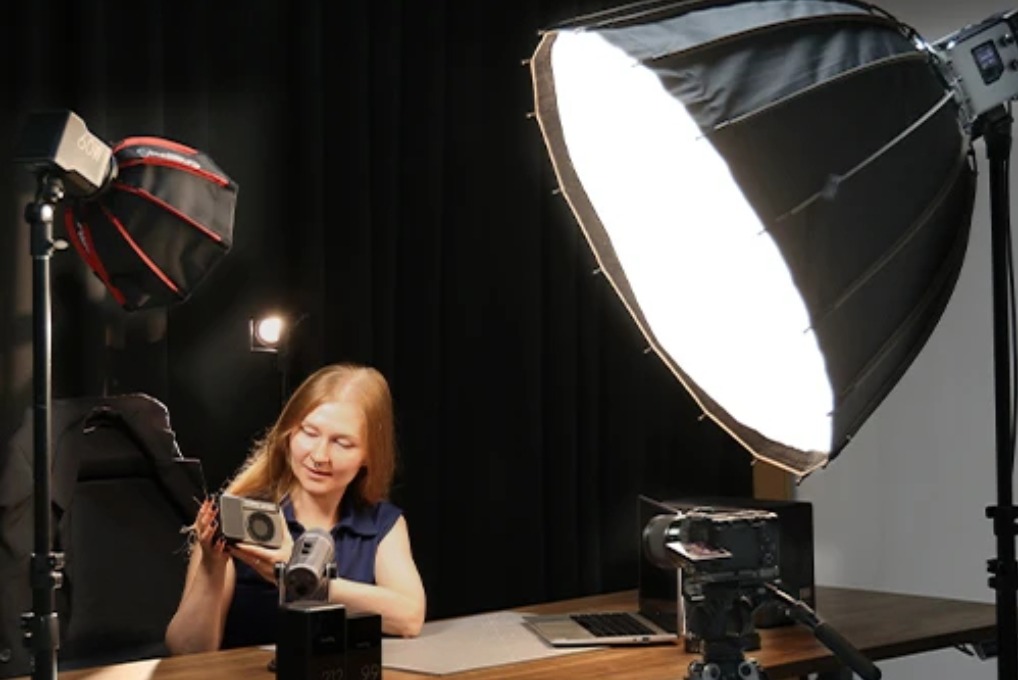
Softbox: The Go-To for Flattering Light
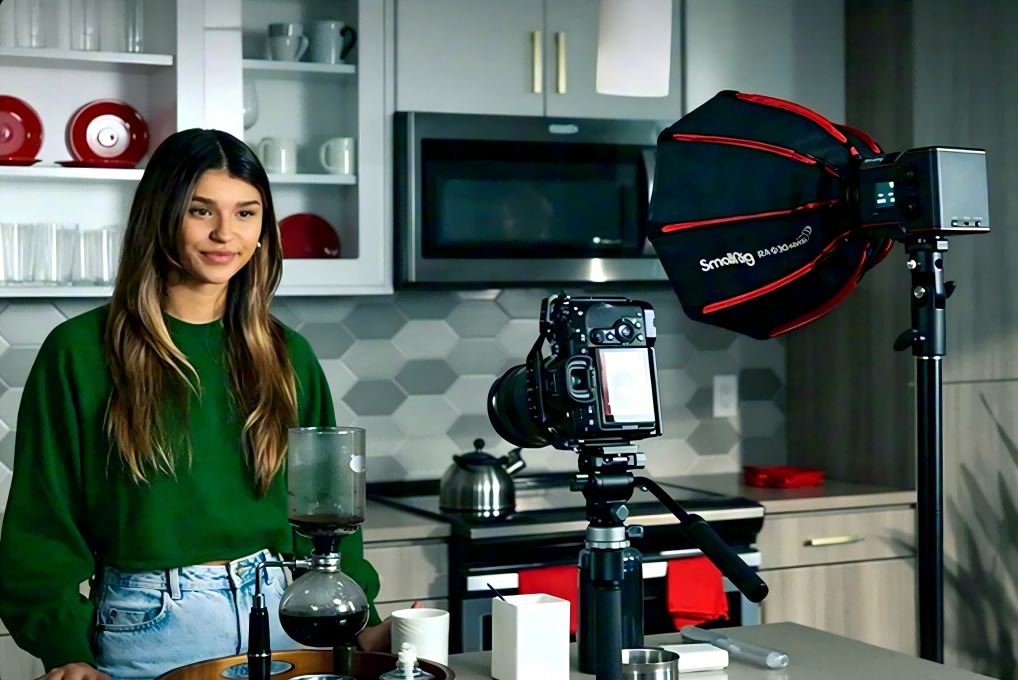
A softbox does exactly what its name suggests. It takes harsh light and makes it soft. The fabric front diffuses whatever light source you put inside, creating beautiful, wraparound illumination that hides skin imperfections and creates gentle shadows.
Softboxes come in different shapes.
-
Rectangular ones work great for full-body shots.
-
Octagonal softboxes create round catchlights in your subject's eyes.
-
Strip boxes are long and narrow, perfect for edge lighting or product photography.
COB Light: Powerful and Focused
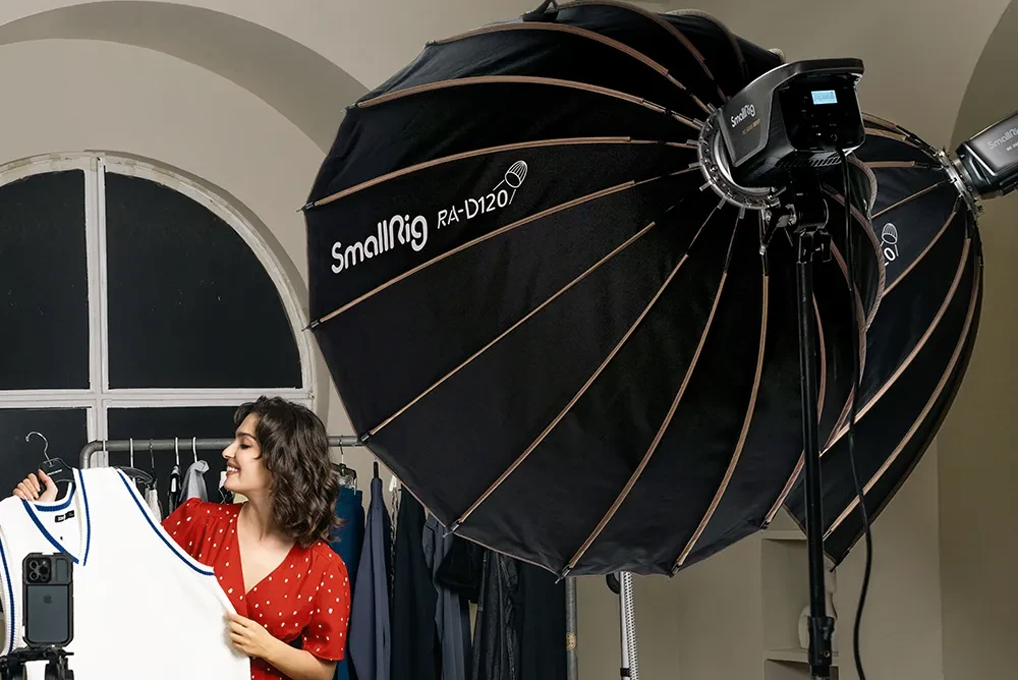
COB stands for Chip on Board. Unlike LED panel lights that use multiple small diodes, COB lights pack all their LED chips together on one surface, creating an intensely bright, single-point light source.
Think of COB lights as the workhorses of video lighting. They pump out serious power, ranging from compact fixtures for small spaces to higher-output lights commonly used on larger sets. You can shape this light with barn doors, snoots, or Fresnel lenses. Many filmmakers use COB lights inside softboxes for maximum output with soft quality.
For example, a point-source COB like the SmallRig RC 120 series is designed for creator-friendly setups and supports fine brightness control. Some versions also offer app-based control, making it easier to dial in exposure quickly on set.
LED Panel Light: Versatile and Portable
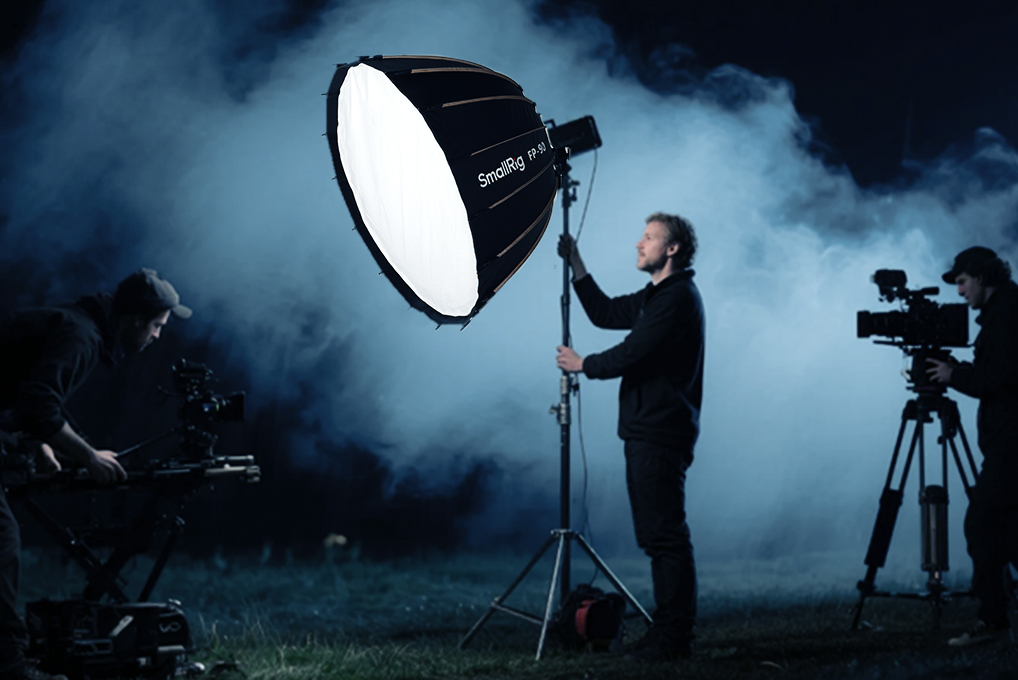
LED panel lights changed the game for video lighting. These flat panels contain dozens to hundreds of small LED bulbs arranged in a grid. Many models are bi-color, letting you switch between tungsten-balanced and daylight-balanced looks—two common standards in film and video lighting.
The beauty of LED panel lights? They're lightweight, run cool, and draw minimal power. You can mount them on stands or run them off batteries for location shoots.
The downside is that they create slightly harder shadows than softboxes unless you add diffusion.
If you want something even more grab-and-go than a full panel, SmallRig also offers compact “pocket LED” video lights that are easy to mount and carry—handy for run-and-gun shooting or quick fill on location.
RGB Light: Creative Color Control
RGB lights let you dial in any color imaginable. Red, green, and blue LEDs mix together to create a wide range of color combinations.
Here's the thing about RGB lights in professional video lighting: they're fantastic for accent and background work. For key lighting, higher-end full-spectrum fixtures (or strong white-light modes) usually deliver more consistent skin tones and color reproduction on camera.
How to Set Up Video Lighting for Different Scenes?
Theory means nothing without practical application. Here's how to light common scenarios using your studio lights.
Interviews and Portraits
The classic three-point lighting technique never goes out of style.
-
Start with a softbox as your key light, positioned around 45 degrees to one side of your subject and slightly above eye level. This creates dimension and depth.
-
Add a second softbox or LED panel light on the opposite side as fill, but dial it down to roughly half the intensity of your key.
-
Finally, place a small LED panel light or COB light behind your subject. This rim light separates them from the background.
Product Photography
Product shots need even, controlled lighting. Set up two LED panel lights on either side of your product at roughly 45-degree angles. This eliminates harsh shadows while maintaining texture and detail.
For extra punch on reflective surfaces, add a COB light from above or slightly behind. This creates highlights and dimensions that make products pop. The adjustable color temperature on LED panel lights helps match your lighting to the desired mood.
Dramatic Scenes
Drama lives in the shadows. Instead of filling every corner with light, use a single COB light or softbox as a strong key from one side. Let the other side fall into shadow.
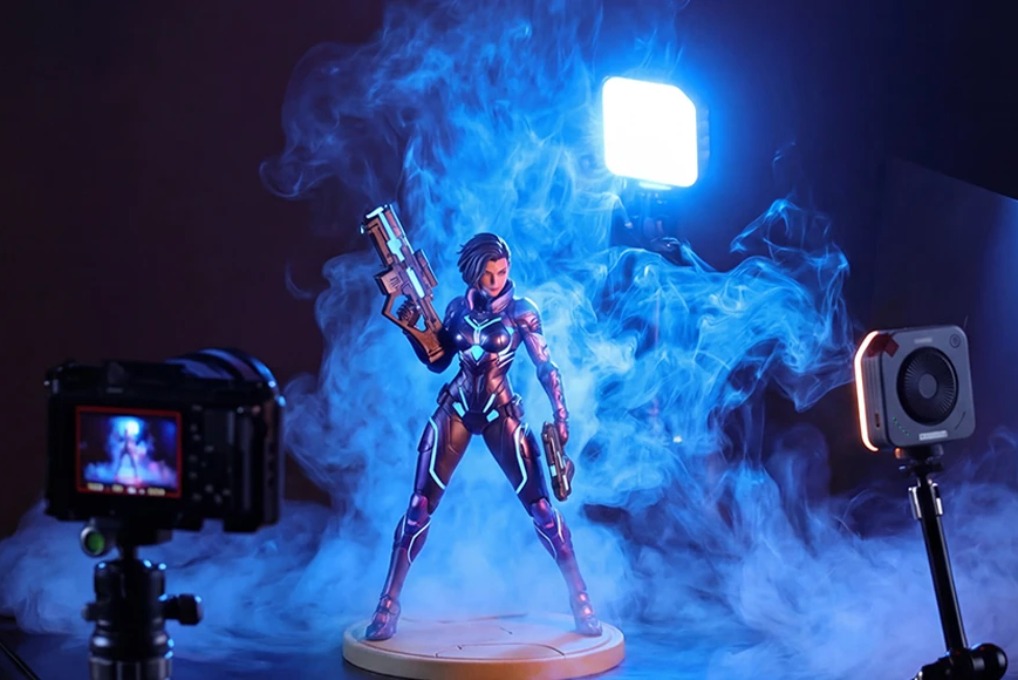
This is where RGB lights shine. Place them in the background to create colored pools of light that suggest mood and atmosphere. The combination of traditional studio lights for your subject and RGB lights for the environment creates cinematic depth.
Green Screen
Green screen work demands precise, even lighting. You need to light the green screen separately from your subject. Use two or three LED panel lights positioned at 45-degree angles to the screen, standing far enough back to create even coverage.
Light your subject with the standard three-point technique using softboxes or LED panel lights, but keep them a few feet (or roughly a couple of meters) away from the green screen to reduce green spill and make keying easier.
What Video Lighting Techniques Do Film Professionals Use?
Common illumination patterns used in photography often serve as the foundation for thesecinematic methods. Understanding these core approaches elevates your work from good to great.
Three-Point Lighting
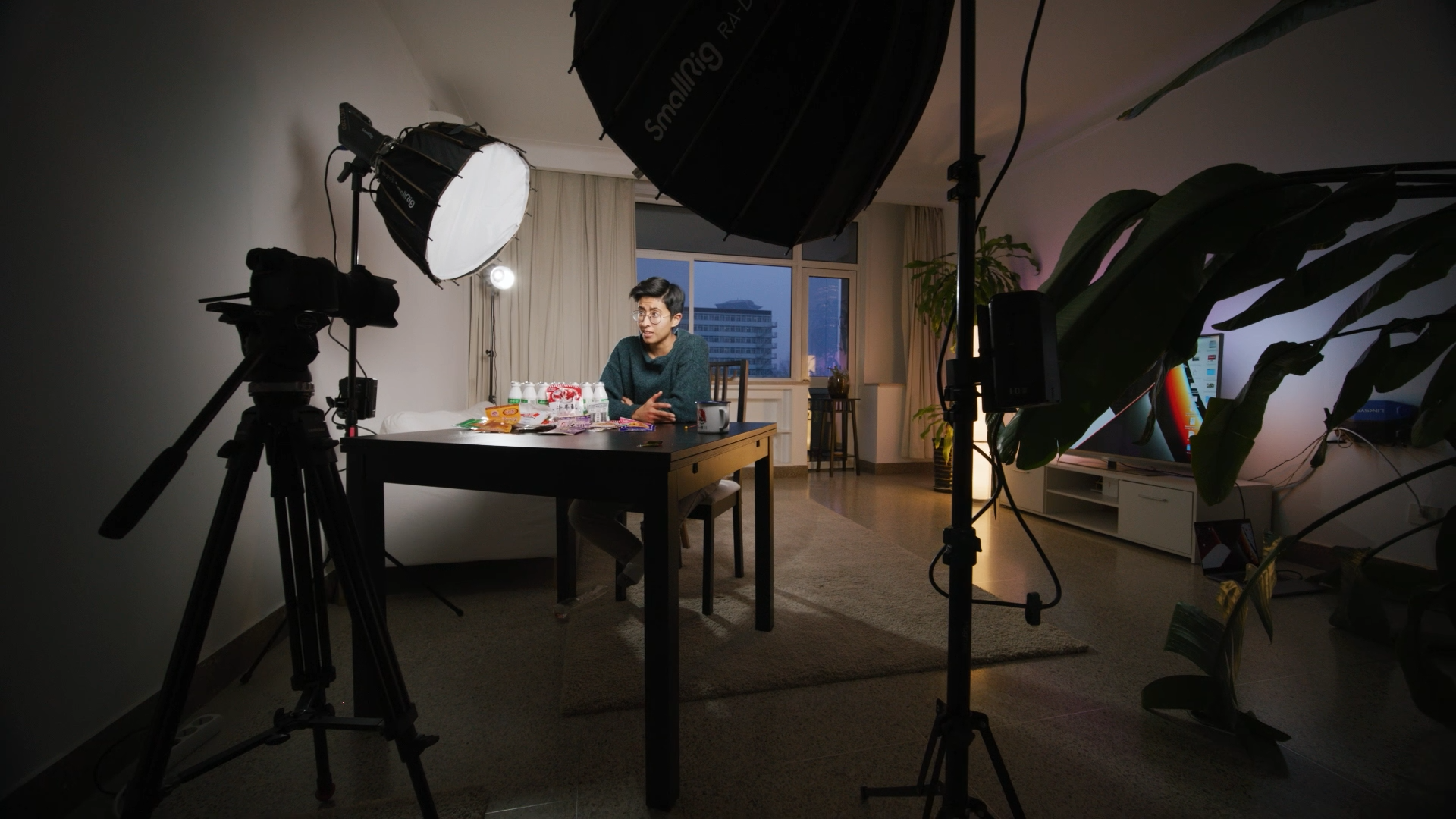
Three-point lighting with properly positioned studio lights creates professional-looking images every time. The key provides main illumination, the fill controls contrast, and the back light adds separation. Master this before getting fancy.
High-Key and Low-Key
High-key lighting means bright, even illumination with minimal shadows. Use multiple softboxes and LED panel lights to flood the scene with light, keeping contrast low and shadows minimal for a clean, bright look.
Low-key lighting embraces shadow and contrast. A single COB light or softbox creates the main illumination while large areas remain dark. This technique works beautifully for mystery, thriller, or dramatic content.
Color Temperature Mixing
Different light sources have different color temperatures. In film and video, tungsten is commonly referenced at around 3200K, and daylight at around 5600K.
Try warming up the key light to 3200K while keeping the backlight at 5600K. This creates subtle but appealing color separation that adds visual interest.
Light Shaping
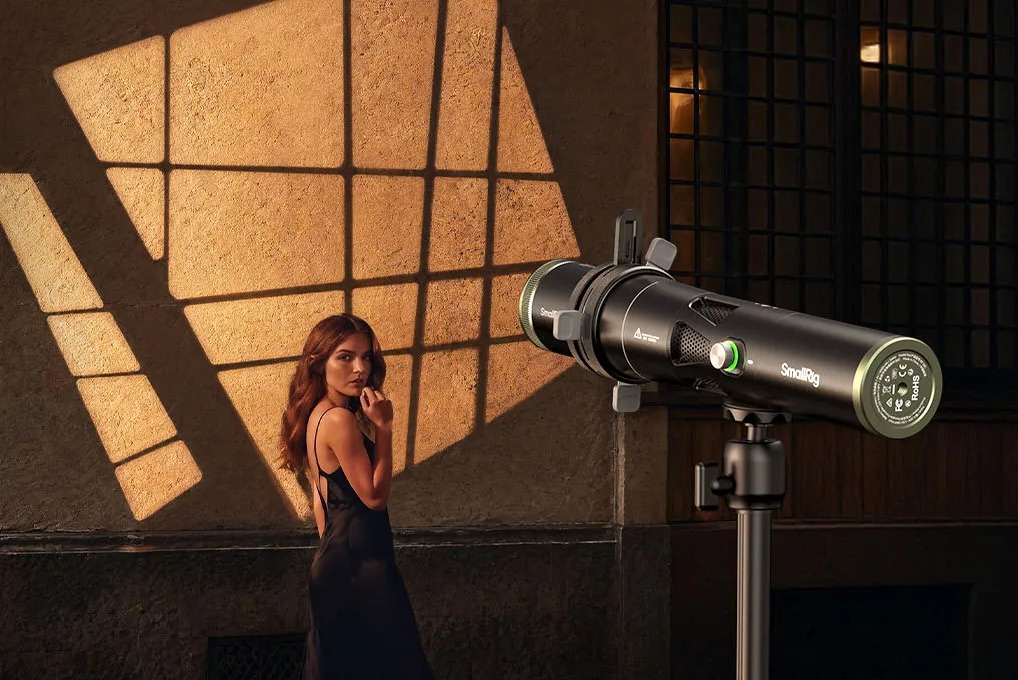
Sometimes you want soft, flattering light from a softbox. Other times, hard, direct light creates the look you need. Hard light from a bare COB light or focused LED panel light creates defined shadows and dramatic contrast.
The key is knowing when to use each approach. Beauty and interview work typically demands softbox lighting. Action scenes often call for hard light from COB lights.
Background Separation
Flat lighting looks amateur. Professional video lighting creates layers. Beyond your three-point setup on the subject, add RGB lights to illuminate the background separately. Even a single RGB light aimed at the wall behind your subject adds depth and dimension.
How Should You Choose and Build Your Studio Lights Kit?
Smart purchasing saves money and headaches down the road.
Softbox Selection: Size, Shape, and Mounting
Bigger softboxes create softer light, but they're harder to manage.
-
A smaller softbox works well for headshots and tight talking-head framing.
-
A medium softbox is great for half-body shots and seated interviews.
-
A larger softbox becomes useful when you need softer coverage for wider shots or multiple subjects.
Strategic positioning, distance adjustments and pay attention to mounting systems. Some softboxes use speedrings while others use Bowens mounts, which have become an industry standard. Choose lights and modifiers that share mounting systems.
COB Light Specs: Power, Color Temperature, and Modifiers
Wattage matters with COB lights. Lower-output fixtures are easier to manage in small rooms, while higher-output units help when you need more distance, larger modifiers, or brighter scenes.
Look for lights that accept Bowens mount modifiers. This opens up your options for softboxes, reflectors, and other light-shaping tools.
LED Panel Light Parameters: CRI and Dimming Range
CRI (Color Rendering Index) measures how accurately a light reproduces colors. Because CRI is based on a standardized evaluation method, it can be a useful baseline spec when comparing lights.
For video work, many creators also check camera-focused metrics like TLCI to better predict how a light will render on-screen.
Dimming range matters too. Better LED panel lights dim smoothly across the range and maintain stable output even at very low brightness, giving you precise control over your studio lights setup.
RGB Light Quality: Color Accuracy and Control
Not all RGB lights perform equally. Budget models might claim huge color ranges but produce muddy, inaccurate hues. If you care about clean skin tones and usable white light, look for RGB fixtures that also perform well in their white-light modes.
Control options range from simple onboard knobs to smartphone apps. If you're just adding background color to video lighting setups, basic controls work fine.
FAQ
Q1. How to Prevent Flicker in LED and RGB Lighting?
Flicker usually happens when your shutter settings don’t sync well with the local power frequency or the light’s internal driver. A practical fix is to adjust the shutter speed to match your region:
-
In 50 Hz areas, try 1/50 or 1/100.
-
In 60 Hz areas, try 1/60 or 1/120.
If you're shooting very high frame rates, always test your lights before the real take—some fixtures handle high-speed recording better than others, depending on their driver design.
Q2. What Accessories Do You Need for a Starter Lighting Kit?
Beyond basic video lighting units:
-
Get C-stands or light stands rated for your equipment's weight.
-
Sandbags prevent expensive COB lights or softboxes from tipping.
-
Diffusion gels turn harsh LED panel lights into softer sources when you don't have a softbox.
-
Color correction gels help match different studio lights or add creative tints.
-
A simple reflector effectively doubles your light count by filling shadows.
-
For RGB lights, consider app-enabled models for easier adjustments.
-
Don't forget extension cords and power strips.
Finally, learn to use your camera's histogram properly, as even expensive softboxes and COB lights need correct exposure settings.
Q3. Should I Buy Battery-Powered Studio Lights or AC-Powered Video Lighting for a Home Studio?
For a dedicated home studio, AC-powered studio lights make more sense. They're more affordable, more powerful, and you never worry about battery life. A quality COB light or LED panel light running on wall power outputs consistent brightness for hours. Battery-powered video lighting works best for location work or outdoor shoots. However, batteries add cost and weight to softbox setups and LED panel lights. If your work is mostly in your home studio with occasional location shoots, buy AC-powered studio lights and rent battery options when needed. Some modern LED panel lights and COB lights offer dual-power flexibility for the best of both worlds.
Conclusion
Start with one or two quality LED panel lights or a softbox setup. Add a backlight, then expand into COB lights and RGB lights as your skills grow. Great video lighting comes from understanding how light shapes your story and using the right studio lights for each job.
If you want a clean, scalable path to upgrade your lighting, SmallRig is worth checking out—its lighting ecosystem spans COB lights, compact LEDs, RGB options, plus practical support gear like stands and mounting accessories, making it easier to build a matching kit as your shoots grow.
Keep Reading
 Best Portable Lighting Setup for Solo Content Creators
 Review: SmallRig RF 20C Portable Zoom Light
 Why You Need a Video Light: A Complete Guide for Content Creators