
Search smallrig.com...


SmallRig AD-01 Heavy-Duty Fluid Head Tripod (3751B) Review: Built for DJI RS Gimbal Users
SmallRig 2026-08-13 19:37:24
Contents
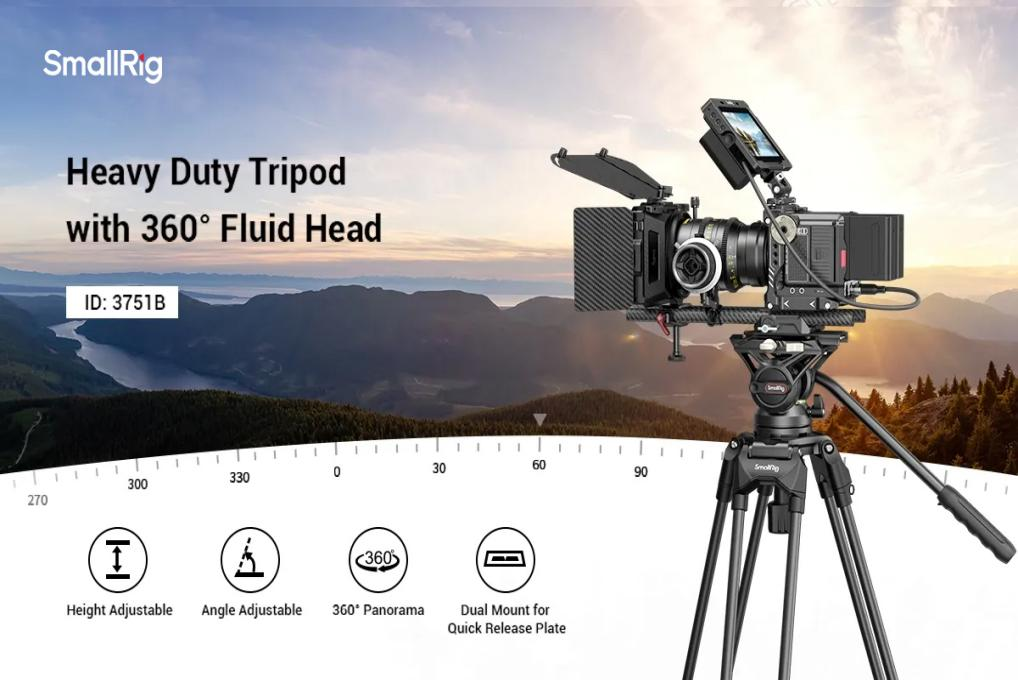
If you own a DJI RS 3 Pro, you already know how good its quick-release system feels. Camera on, slide in, lock, shoot. DJI spent years refining that mechanism, and it shows.
The problem surfaces the moment you want to move from gimbal to tripod. Your RS plate and your tripod's quick-release system are two different things. You either carry adapters, swap plates, or accept that moving between the two tools takes longer than it should. On a shoot where the moment is already happening, that gap costs you.
SmallRig built the AD-01 around that specific friction point. The question they started with: can the transition between a DJI stabilizer and a tripod feel as natural as switching shooting modes? The 3751B is where that question got answered.
Specs at a Glance
| Spec | Detail |
| Material | Heavy-duty aluminum alloy double-tube |
| Height Range | 85–186cm (33"–73") |
| Bowl Base | 75mm |
| Maximum Load | 8kg (17.6 lbs) |
| Fluid Head Movement | 360° horizontal / +90° to -75° vertical |
| Quick-Release | DJI RS 2 / RS 3 / RS 3 Pro + Manfrotto |
| Camera Thread | 1/4"-20 and 3/8"-16 |
| Accessory Holes | Three 1/4"-20 threaded holes on bracket |
| Weight | 2.86kg (6.3 lbs) |
| Included | Storage bag, built-in wrench, anti-slip handle |
First Impressions: It Looks More Expensive Than It Is
Opening the bag, the AD-01 doesn't look like a budget tripod. The finish is clean, the leg locks are metal, and the overall silhouette reads professional video kit rather than entry-level gear. If you handed this to someone unfamiliar with the price, they wouldn't guess it correctly.
Set it up and the impression largely holds — right up until you start handling the knobs, levers, and smaller plastic components around the head. That's where the material trade-offs become tactile. The structural parts are aluminum: legs, tilt arms, the bowl base, the spreader. The grips, flip levers, and various connection points are plastic, and some of them feel noticeably lighter than the rest of the build. None of it feels like it would fail immediately, but it doesn't invite the same confidence as the aluminum sections.
This is the honest shape of the AD-01: SmallRig made deliberate choices about where to use premium materials and where to use lighter ones, and the result is a tripod that delivers professional-level features at a price that requires those choices. The key question isn't whether the plastic is there — it is — but whether it matters for how you shoot. For most use cases, it doesn't.
Dual-Mode Quick-Release: The Reason to Buy This Tripod
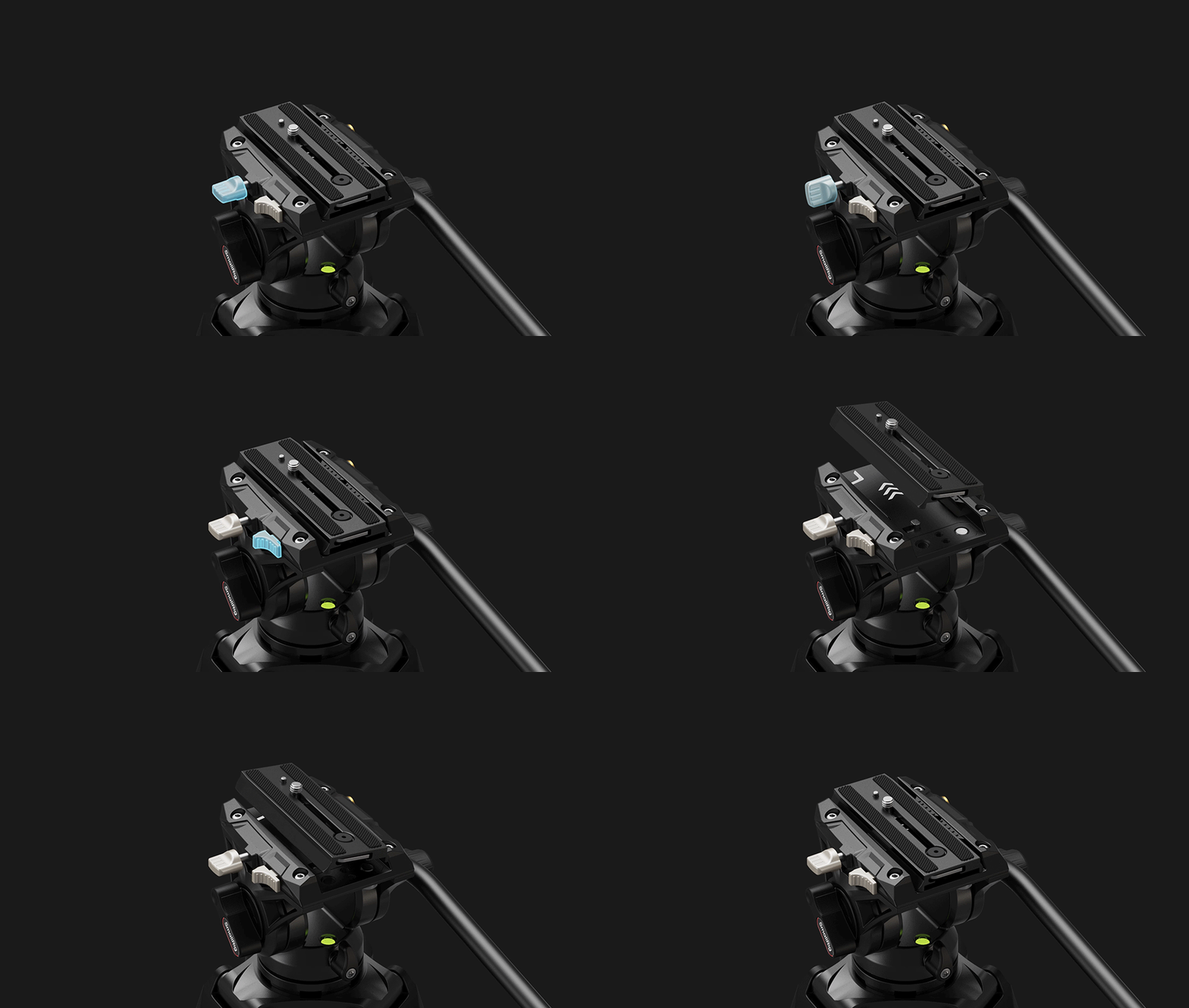
This is the AD-01's defining feature, and it's the one that makes it genuinely different from everything else at this price.
The fluid head has a native dual-mode quick-release mount that accepts both DJI RS quick-release plates and Manfrotto plates without any adapter. There's a toggle switch between the two modes. Your camera stays on the plate it's already on — whether that's a DJI RS plate from your gimbal workflow or a Manfrotto plate from another setup — and the head accepts it directly.
In practice, this means pulling your camera off the RS 3 Pro and mounting it on the tripod takes the same amount of time it takes to do the motion. No plate swap, no digging for an adapter, no second-guessing whether the adapter is in the right bag. For a shooting day that alternates between handheld gimbal work and locked-off tripod shots — interviews, events, documentary — this removes the single most consistent friction point in that workflow.
A practical note on plate orientation: the plate needs to go on with the index line aligned to the scale on the head. Put it on backwards and it won't sit flat or lock properly. It's easy to do once and never again, but worth knowing before your first shoot with it.
The side-pressed quick-release button on the head works cleanly regardless of grip position or handle direction. One push and the plate releases — no lever hunting, no awkward grip adjustment.
The Fluid Head: Honest Assessment
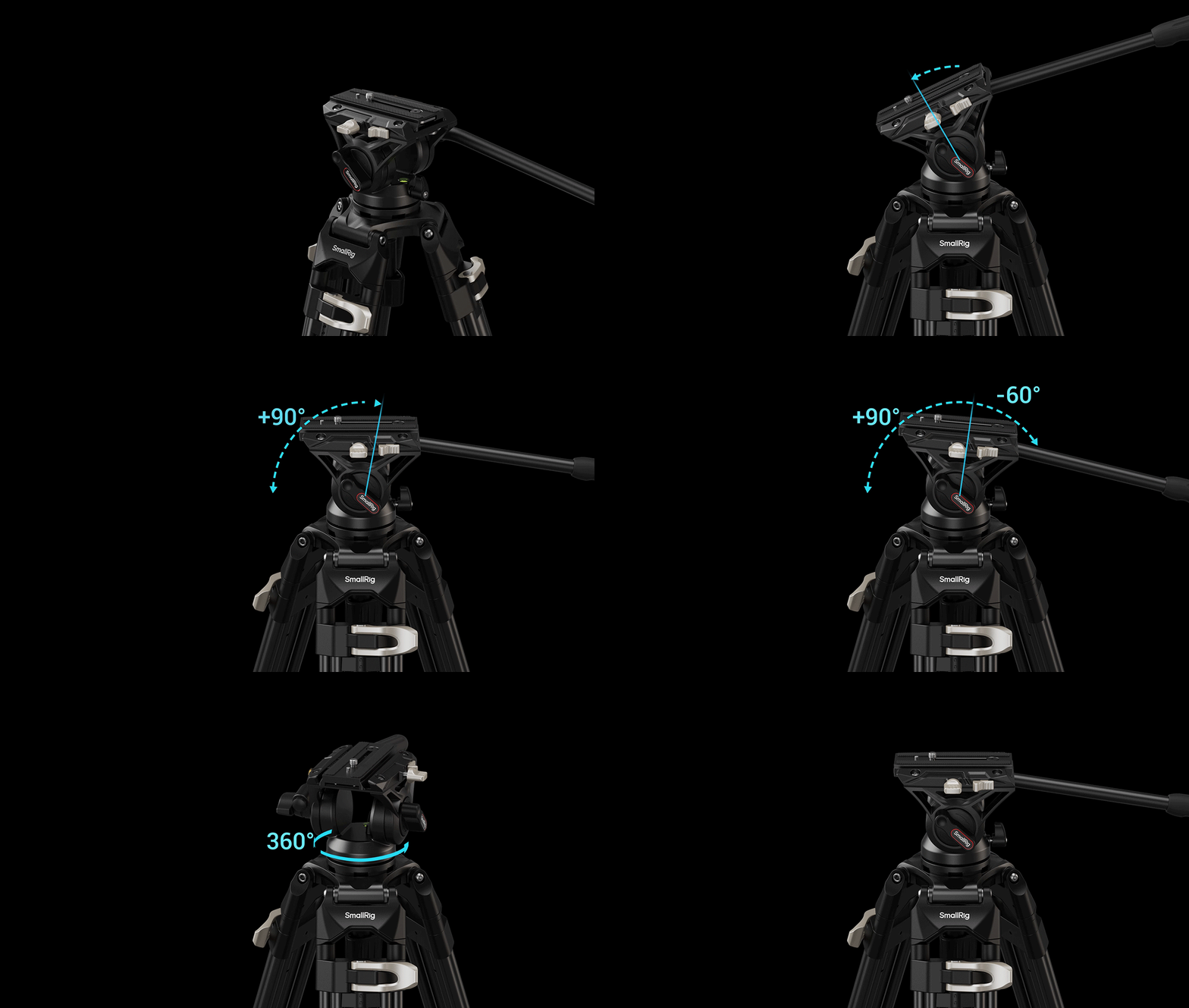
The fluid head is where the AD-01 performs best and also where its limitations are most visible.
Start with what it does well. The tilt damping is genuinely good — enough resistance to feel controlled, smooth enough that the movement doesn't lurch at the start or end of a shot. Tilting down from a speaker's face to their hands, or up from a product to a presenter, produces the kind of movement that looks intentional rather than mechanical. The damping and balance system returns the head toward a neutral vertical position when you release the handle — useful for maintaining consistency across multiple takes without readjusting.
The -75° vertical range is more generous than most competitors at this price, which matters for shooting subjects below camera level — products on a low table, seated subjects, ground-level scenes — without having to collapse the legs to compensate.
The pan is where you need to adjust your expectations. Unlike the tilt, pan adjustment on the AD-01 is binary: locked or free. There's no intermediate drag setting. Free pan is genuinely smooth, but controlling the speed and consistency of a pan shot requires a light, deliberate touch. Operators used to a proper fluid drag system will feel the difference immediately. It's workable — plenty of usable footage comes off this head — but it takes practice to make it look effortless, and it will always be the ceiling of what the AD-01 can do rather than the floor.
Eight kilograms of head load is the rated capacity. Realistically, this tripod shines with mirrorless cameras and light-to-medium lens configurations. A Sony A7 series body with a standard zoom, a Canon EOS R with a telephoto prime, a caged mirrorless with a monitor and wireless audio — all of these work well within the range where the head performs at its best. Push toward the upper end of the weight rating with a heavy cinema rig and you'll start noticing that the fixed counterbalance system doesn't have the adjustment range to properly balance significantly heavier setups.
Height Adjustment and Stability
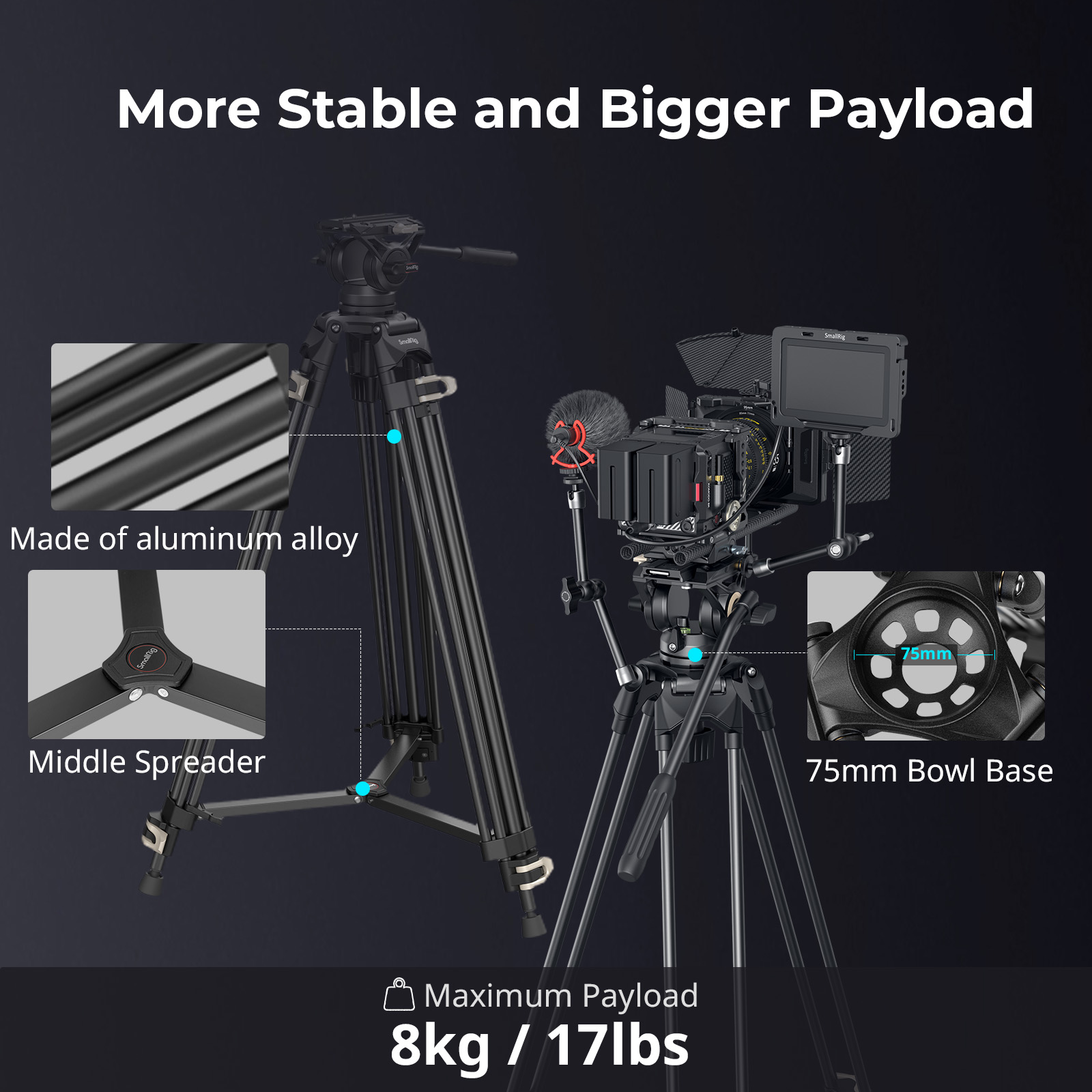
The three-section legs use flip-lock levers rather than twist locks, and the difference in setup speed is immediately noticeable — especially if you're coming from a twist-lock tripod. Flip, extend, flip back. Each section locks firmly and holds position without creeping. After sustained use across multiple shoots, the mechanism remains consistent — no loosening, no slipping.
Height range from 85cm to 186cm covers almost every standard shooting scenario: tabletop product work at the low end, eye-level coverage for standing subjects at the high end. At maximum extension, the camera plate sits at 185cm — meaning you'll be looking down at the camera to check framing unless you're unusually tall. For event and interview work where a monitor handles framing, this isn't a problem. For run-and-gun documentary where you're shooting through the viewfinder, it's worth factoring in.
The minimum height of 85cm is the most significant functional limitation of the AD-01. It cannot get low. If you regularly shoot at ground level — low-angle narrative shots, floor-level product photography, anything that puts the camera below knee height — this tripod physically can't do it. It's a structural consequence of the bowl base and leg design, not a defect, but it's a real constraint that determines whether this tripod fits your workflow.
Stability across the height range is strong for its class. The double-tube leg construction — two parallel tubes per section rather than a single tube — resists lateral flex during panning in a way that single-tube legs don't. Pan the head and the legs stay planted. At full extension with a heavier configuration, there's some perceptible flex that a heavier professional tripod wouldn't show, but at normal working heights with mirrorless gear, it's a non-issue.
The 75mm bowl base is one of the AD-01's most practically valuable features relative to its price. After adjusting height, you level the head through the bowl rather than releveling three legs individually. Combined with the built-in bubble level, getting back to a level shot after a height change takes seconds rather than minutes. This matters most on shoots where you're adjusting height multiple times — events, interviews where subjects stand up, multi-setup corporate shoots.
Build Quality Over Time
The AD-01 is built to handle a consistent professional workload, not to absorb the kind of punishment a broadcast rental tripod takes. The aluminum structural components hold up well with regular use — the leg locks remain tight, the bowl positions consistently, and the head operates the same way at month six as it did on day one.
The plastic components are the variable. The knobs, levers, and smaller connection points around the head are the areas where you'd want to be deliberate rather than rough. This isn't a tripod to throw into a van unsecured or drag across concrete. Treat it as a piece of professional equipment that goes in its bag between setups and it performs reliably. Treat it like rental gear with someone else's money and the plastic sections will show it.
The included carrying bag does a proper job of protecting the tripod in transit — it's 92cm long with a shoulder strap and opens fully along the sides for easy extraction. The padded head cover is a detail that matters more over time than it seems on day one; it keeps dust and debris out of the damping system during storage and transport. The magnetic hex key built into the quick-release plate is the kind of small design decision that you stop noticing because it's always exactly where you need it.
What It Gets Right, What It Doesn't
The AD-01 gets the most important things right: the dual-mode quick-release works exactly as described, the tilt head is genuinely smooth, the height adjustment is fast, the stability at normal working heights is solid, and the overall package — bag, head cover, hex key — feels more considered than the price suggests.
Where it falls short: the pan head requires a learned touch rather than delivering precise drag control out of the box, the minimum height of 85cm is a hard limit for low-angle work, and the plastic components in the head area don't inspire the same confidence as the aluminum legs. For daily-rental-level abuse, it's not the right tool. For a creator who treats their gear well and needs a reliable DJI RS-compatible video tripod that handles a consistent professional workload, it performs above what the price implies.
The FreeBlazer AD-Pro8 is the step up when you need adjustable counterbalance, independent pan and tilt damping control, a taller maximum height, or a carbon fiber build for reduced carry weight. For everyone else — especially DJI RS users who want the gimbal-to-tripod transition to stop being an interruption — the AD-01 3751B makes a strong case for itself.
AD-01 3751B vs FreeBlazer AD-Pro8 4465
| AD-01 3751B | FreeBlazer AD-Pro8 4465 | |
| Material | Aluminum alloy | Carbon fiber |
| Max Height | 186cm | 196cm |
| Min Height | 85cm | 58cm |
| Max Load | 8kg | 8kg head / 15kg legs |
| Counterbalance | Fixed built-in | 6-step adjustable, 1–8kg |
| Pan/Tilt Damping | Fixed, pan binary lock/free | 4-step independent per axis |
| Overall Weight | 2.86kg | 5.8kg kit |
| Bowl Base | 75mm | Flat base |
| Best For | DJI RS hybrid workflow, events, interviews | Studio, broadcast, precision video |
Verdict
The AD-01 3751B is a focused product. It's not trying to be a professional broadcast tripod at a consumer price — it's trying to be the best video tripod for DJI RS gimbal users who need reliable performance at a price that makes sense before they're ready to step up to a FreeBlazer.
On those terms, it succeeds. The dual-mode quick-release is the real thing — it works, it's fast, and it genuinely changes how a gimbal-and-tripod workflow operates. The tilt head is smooth enough for professional use. The legs are stable, fast to adjust, and hold up over time. The package is thoughtful in ways that matter on location.
The pan head needs a light touch, the minimum height rules out low-angle shooting, and the plastic components require considered handling rather than rough treatment. These are real limitations, and knowing them going in is the difference between a tripod that fits your workflow and one that frustrates it.
For DJI RS users who shoot a mix of gimbal and tripod work and need those two tools to transition without interrupting the shoot — the AD-01 3751B is the answer that doesn't require FreeBlazer money.
Keep Reading
 Best Travel Tripods 2026: Carbon Fiber vs Aluminum — Which Should You Choose?
 71" Camera Tripod 3935: A Quick Guide to Mastering Versatile Shooting
 A Complete Guide to Using the SmallRig 78" Camera Tripod 3474C