
Search smallrig.com...


Best Travel Tripods 2026: Carbon Fiber vs Aluminum — Which Should You Choose?
SmallRig 2026-06-25 01:05:40
Contents
Introduction
You're three miles into a mountain trail. The golden hour light is perfect. You reach for your tripod—and the aluminum legs that felt fine at home now feel like dead weight. Carbon fiber would have saved you half a kilo and a lot of regret.
At SmallRig, we've tested both materials from Icelandic glaciers to Tokyo streets. Our recommendation: for travel photographers, carbon fiber wins. The weight savings compound with every mile, the vibration damping sharpens long exposures, and the temperature handling keeps you shooting in any weather. Here's our top carbon fiber picks, and when aluminum still makes sense.
Carbon Fiber vs Aluminum Tripod: Which is Better for Travel?
Before diving into our product recommendations, here's how the two materials stack up across the factors that actually matter when you're traveling:
|
Factor
|
Carbon Fiber
|
Aluminum
|
|---|---|---|
|
Weight
|
AP-20: 1.25kg with 12kg load capacity—exceptional strength-to-weight ratio
|
Comparable models noticeably heavier for similar specs
|
|
Vibration Damping
|
Layered composite construction naturally absorbs camera shake and wind gusts
|
Requires careful technique; mass provides wind resistance but not damping
|
|
Price
|
Entry point at $149 (AP-20); premium models $500-900
|
Budget options from $60; mid-range $150-250
|
|
Durability
|
20,000+ deployment cycles tested; resists corrosion and fatigue
|
Dents rather than cracks; field-repairable after impacts
|
|
Temperature
|
Neutral to touch from -10°C to 40°C
|
Conducts heat/cold; painful to handle in freezing conditions without gloves
|
The bottom line for travelers: Carbon fiber wins on three fronts that directly impact your photography—weight that saves your energy, vibration damping that sharpens your images, and temperature handling that keeps you shooting in any weather.
Why We Recommend Carbon Fiber for Travel Photography
Weight That Compounds With Every Mile
The SmallRig AP-20 Carbon Fiber Tripod weighs a mere 1.25kg yet easily supports 12kg of gear. Folding down to just 40cm, it fits perfectly into a backpack side pocket or carry-on luggage. These weight savings dictate whether you'll actually carry the tripod on a long hike or leave it at the hotel. Our field testing proves that a 500g weight reduction significantly decreases fatigue. By hour three, photographers with lighter tripods have much more energy to scout compositions and wait for the perfect light. Ultimately, the best travel tripod is the one you actually bring with you.
Vibration Damping for Sharper Images
Carbon fiber's layered construction absorbs kinetic energy differently than aluminum. When wind gusts hit the legs, carbon fiber dissipates those vibrations significantly faster. For long exposures—whether shooting waterfalls, astrophotography, or blue-hour cityscapes—this directly translates to sharper images. The AP-20's rigid legs handle telephoto lenses with minimal flex, requiring fewer takes to get a tack-sharp exposure.
All-Weather, All-Day Comfort
Carbon fiber doesn't conduct temperature like aluminum. In freezing conditions, aluminum feels painfully cold, and in desert heat, it becomes too hot to touch. SmallRig's carbon fiber travel lineup—including the AP-20, AP-10, and CT150—remains comfortable to handle from -10°C to 40°C. This matters when making compositional micro-adjustments, ensuring extreme weather won't stop you from shooting.
Our Top Carbon Fiber Travel Tripods
After testing every model in our lineup across multiple continents and shooting scenarios, here are the three carbon fiber tripods we recommend most often:
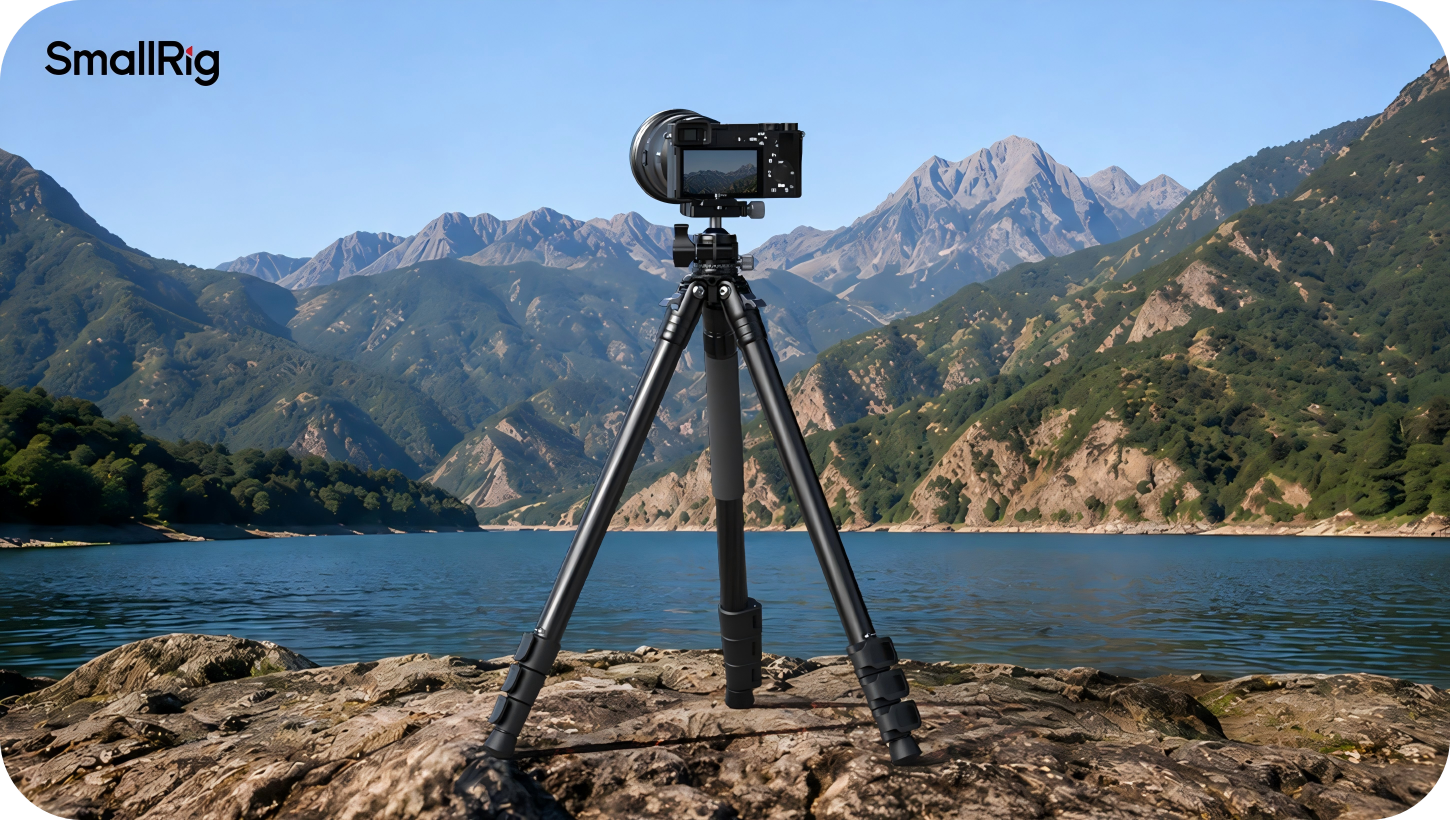
SmallRig AP-20 Carbon Fiber Tripod (4059) — The Everyday Travel Champion
Weight: 1.25kg (2.8 lbs) | Load Capacity: 12kg | Folded: 40cm | Max Height: 158cm
The AP-20 is our most versatile carbon fiber travel tripod. Its four-section legs feature flip-lock levers that easily deploy with one hand, even while wearing gloves. For ultimate flexibility, the detachable center column reverses for low-angle macro photography, and one leg detaches to function as a monopod—perfect for hiking or crowded spaces.
The included Arca-Swiss ball head offers 360-degree panning and 90-degree tilt. Three 1/4"-20 threads on the joints allow accessory mounting without weighing down your camera rig. With three leg angles (23, 55, and 85 degrees), you can seamlessly shoot from tabletop height to full extension. Packed in a lightweight, carry-on friendly bag, the AP-20 is the ultimate, highly recommended solution for traveling photographers shooting everything from landscapes to macro.
Who it's for: Hikers, backpackers, and travel photographers who need a lightweight tripod that doesn't sacrifice stability. At $149, it's the most accessible entry point into carbon fiber.
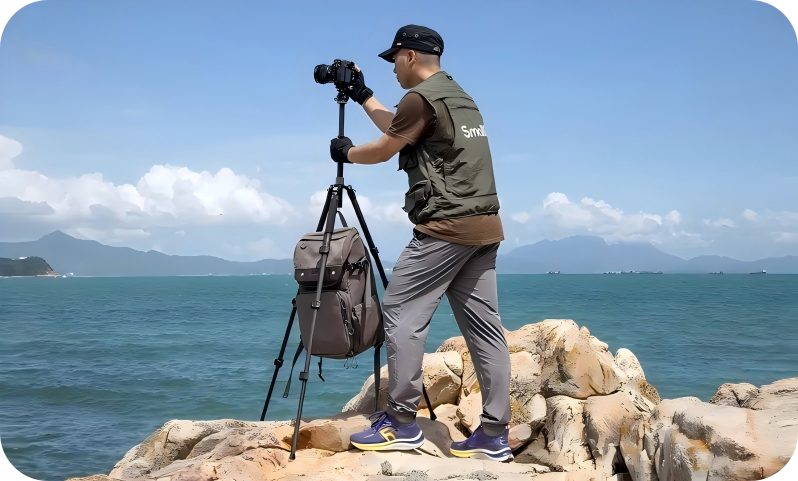
SmallRig AP-10 Carbon Fiber Tripod (4060) — The Ultralight Hiker
Weight: 1.18kg (2.6 lbs) | Load Capacity: 12kg | Folded: 54cm | Max Height: 133cm
The AP-10 redefines travel tripods by removing the center column entirely to shave weight and improve rigidity. This design allows it to sit lower and more stably—ideal for uneven terrain. Its four-section carbon fiber legs with flip-locks deploy from a compact 54cm folded length to a 133cm working height.
For added versatility, one leg detaches into a monopod or walking stick. The Arca-Swiss ball head offers 360-degree panning and 90-degree tilt, while three 1/4"-20 threaded holes on the joints accept additional accessories. With three leg angles (23, 55, and 85 degrees), it effortlessly adapts to any environment.
Weighing just 1.18kg, the AP-10 practically disappears in your backpack. Designed for ultralight hikers and minimalist travelers who count every gram, this carbon fiber tripod includes a compact carrying bag for ultimate portability.
Who it's for: Ultralight backpackers, multi-day trekkers, and minimalist travelers who want carbon fiber performance at the absolute minimum weight. The monopod/walking stick conversion makes it the most versatile single piece of support gear in your pack.
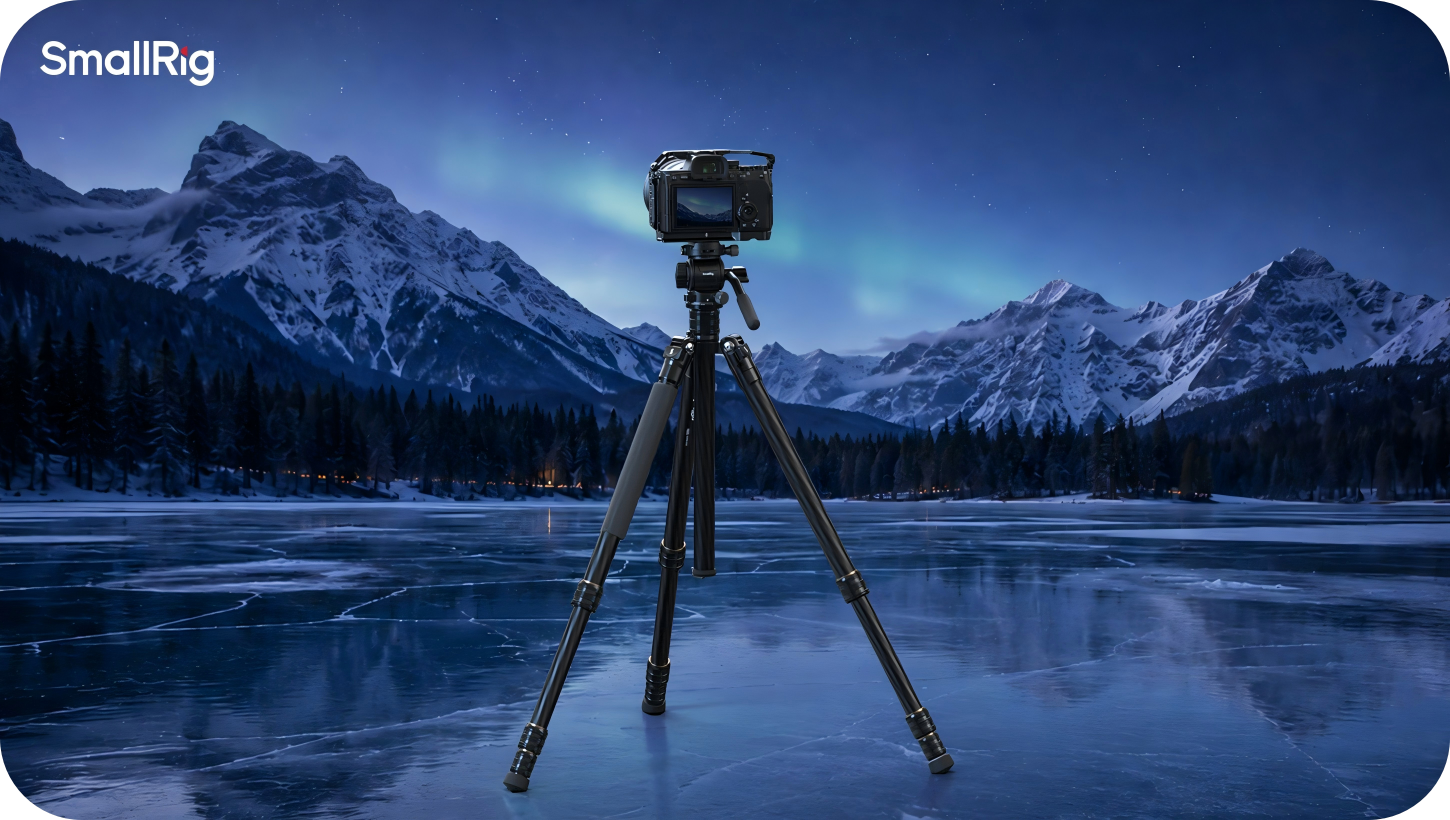
SmallRig CT150 Travel Video Tripod Kit (4937) — The Video Creator's Travel Companion
Weight: 1.3kg (2.9 lbs) | Load Capacity: 8kg (legs), 3kg (head) | Folded: 44cm | Max Height: 157cm
Designed for traveling videographers, the CT150 features reverse-folding carbon fiber legs that collapse to a carry-on friendly 44cm. Its four-section knob-lock legs extend up to 157cm, while the detachable center column reverses for low-angle shots. For run-and-gun shooting, one leg easily converts into a monopod.
The standout feature is the included fluid video head, offering 360-degree panning and +90/-70-degree tilt for cinematic smoothness. It includes an ambidextrous handle, an Arca-Swiss plate, and a 1/4"-20 thread for accessory mounting.
At just $129.99, this complete carbon fiber kit delivers premium fluid-head control without breaking the bank. Complete with a smartphone holder and carrying bag, the CT150 is the ultimate grab-and-go solution for vloggers and hybrid shooters.
Who it's for: Travel vloggers, hybrid photo/video shooters, and content creators who need smooth video panning without hauling a heavy fluid-head system. The reverse-folding design and monopod conversion make it the most travel-ready video tripod in the SmallRig lineup.
When a Budget Aluminum Tripod Still Makes Sense
Despite our carbon fiber recommendation, aluminum tripods remain the right choice for specific scenarios:
-
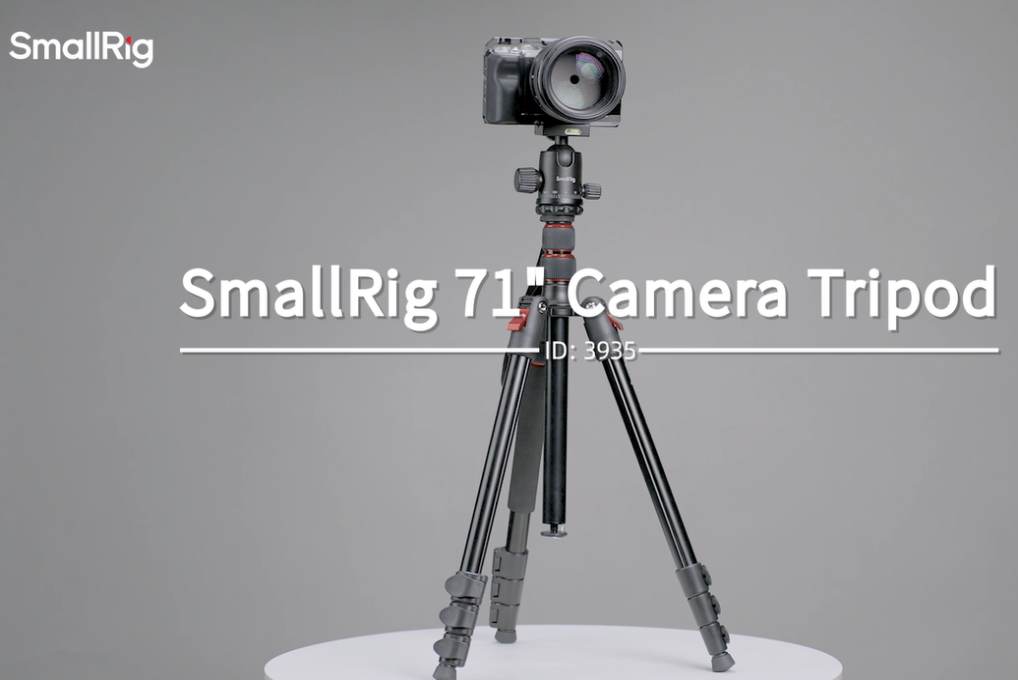
Budget constraints: The SmallRig CT-10 Aluminum Tripod (3935) delivers 15kg load capacity at just 1.53kg for approximately $60. It folds to 43cm and extends to 180cm with a ball head. For beginners testing whether travel photography is their passion, it is the best value entry point.
-
Car-based travel photography: If you rarely carry gear more than 100 meters from your vehicle, the weight penalty of aluminum becomes irrelevant.
-
Learning your needs: If you're buying your first serious tripod, starting with aluminum helps you understand what features you actually use before investing in carbon fiber. The money saved buys a second lens or an extra flight.
Q&A
Q1: Is carbon fiber really worth the extra cost for travel?
Yes. The 300-500g weight savings compound over long hikes, reducing fatigue that directly impacts your photography. Airline baggage limits are strict—saving half a kilogram can mean bringing an extra lens or avoiding overweight fees entirely. The vibration damping also improves long exposure keep rates by reducing micro-blur from shutter slap and wind. The AP-20 at $149 makes carbon fiber accessible without the premium pricing of competitors, proving you don't need to spend a fortune to get the benefits.
Q2: Are carbon fiber tripods fragile?
No. Carbon fiber has exceptional tensile strength—it can support heavy loads without flexing. The difference is in failure mode: sharp, concentrated impacts can crack carbon fiber, while aluminum dents or bends. For normal travel use—hiking, flying, shooting—carbon fiber withstands years of abuse. Our carbon fiber tripods undergo rigorous cycle testing in our lab, and come with a 2-year warranty. Unless you're constantly dropping tripods onto sharp rocks, carbon fiber's reliability matches aluminum.
Q3: What's the one SmallRig tripod you'd recommend for most travelers?
The AP-20 (4059). At $149, it delivers the carbon fiber weight advantage, 12kg load capacity, 40cm folded size, and convertible monopod functionality. It covers 90% of travel photography scenarios without breaking the bank. The flip-lock legs deploy quickly, the Arca-Swiss ball head handles both stills and basic video, and the accessory threads let you build out your rig over time. If you shoot more video, the CT150 (4937) adds a fluid head at $129.99. For ultralight treks, the AP-10 (4060) saves another 70g with its no-center-column design at $139.
Conclusion: Make the Right Choice for Your Journey
Carbon fiber transforms how you travel, offering lighter weight for better portability, superior vibration damping for sharper images, and temperature resistance for all-weather comfort.
For most travel photographers, the SmallRig AP-20 is the ideal starting point. If every gram matters, choose the ultralight AP-10. For video shooters, the CT150 delivers essential fluid-head smoothness.
Base your decision on your budget and shooting style. Great travel photography happens when your gear effortlessly supports your vision rather than holding you back. Choose the right SmallRig model, and get out there to capture the world.
Keep Reading
 71" Camera Tripod 3935: A Quick Guide to Mastering Versatile Shooting
 A Complete Guide to Using the SmallRig 78" Camera Tripod 3474C
 Heavy-Duty Fluid Head Tripod Kit AD-01S 4686 Installation Guide
Related Products from SmallRig