
Search smallrig.com...


Mobile Cinema Rig Guide: Must-Have Accessories for Smartphone Video Creation
SmallRig 2026-05-06 00:51:19
Contents
The pinnacle of smartphone photography is mobile cinema. When we all carry a device capable of shooting 4K, the real gap in quality often lies in the right auxiliary tools and creative thinking. This article is for those who take smartphone video seriously. Starting from rigs, we will extend to lighting, audio, and storage to form a complete mobile cinema shooting system. Whether you shoot vlogs, wedding documentaries, short dramas, or brand content, you will find a suitable solution here.
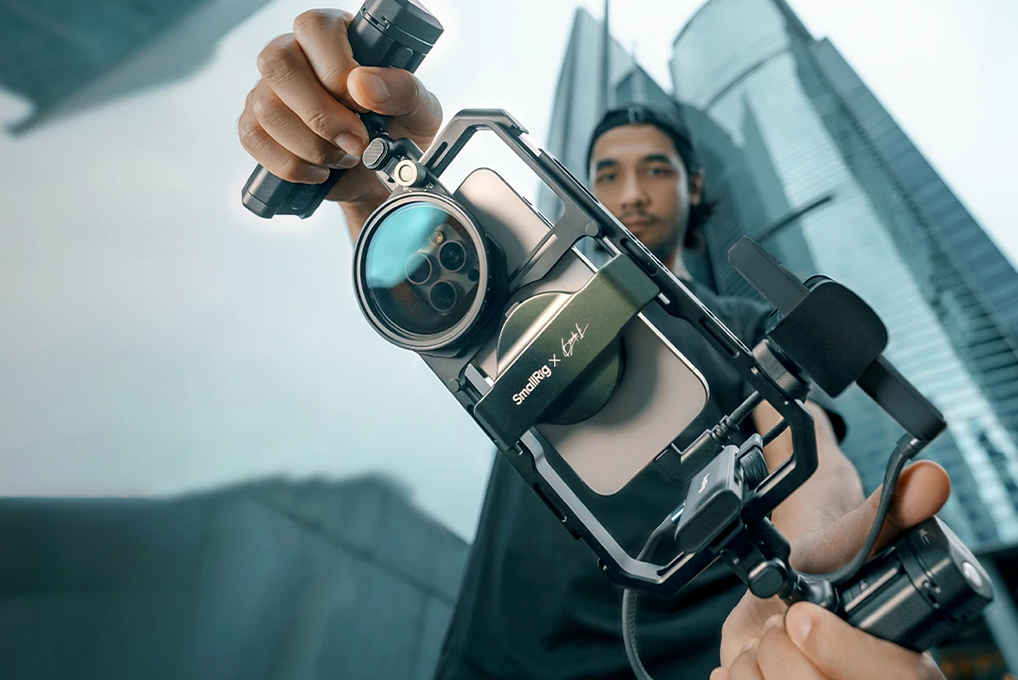
Why Do You Need a "Rig" for Your Smartphone?
Many people think that no accessories are needed for shooting videos with a smartphone, and this idea is understandable — if your goal is just "recording", a single smartphone is indeed sufficient. But when you want to:
-
Stable footage: Smooth walking and following shots without shakiness
-
Two-handed control: Freely switch between pushing, pulling, tilting up and down
-
Multi-device expansion: Connect microphones, fill lights, and external lenses at the same time
-
Quick switch between vertical and horizontal screens: Horizontal for YouTube, vertical for short video platforms
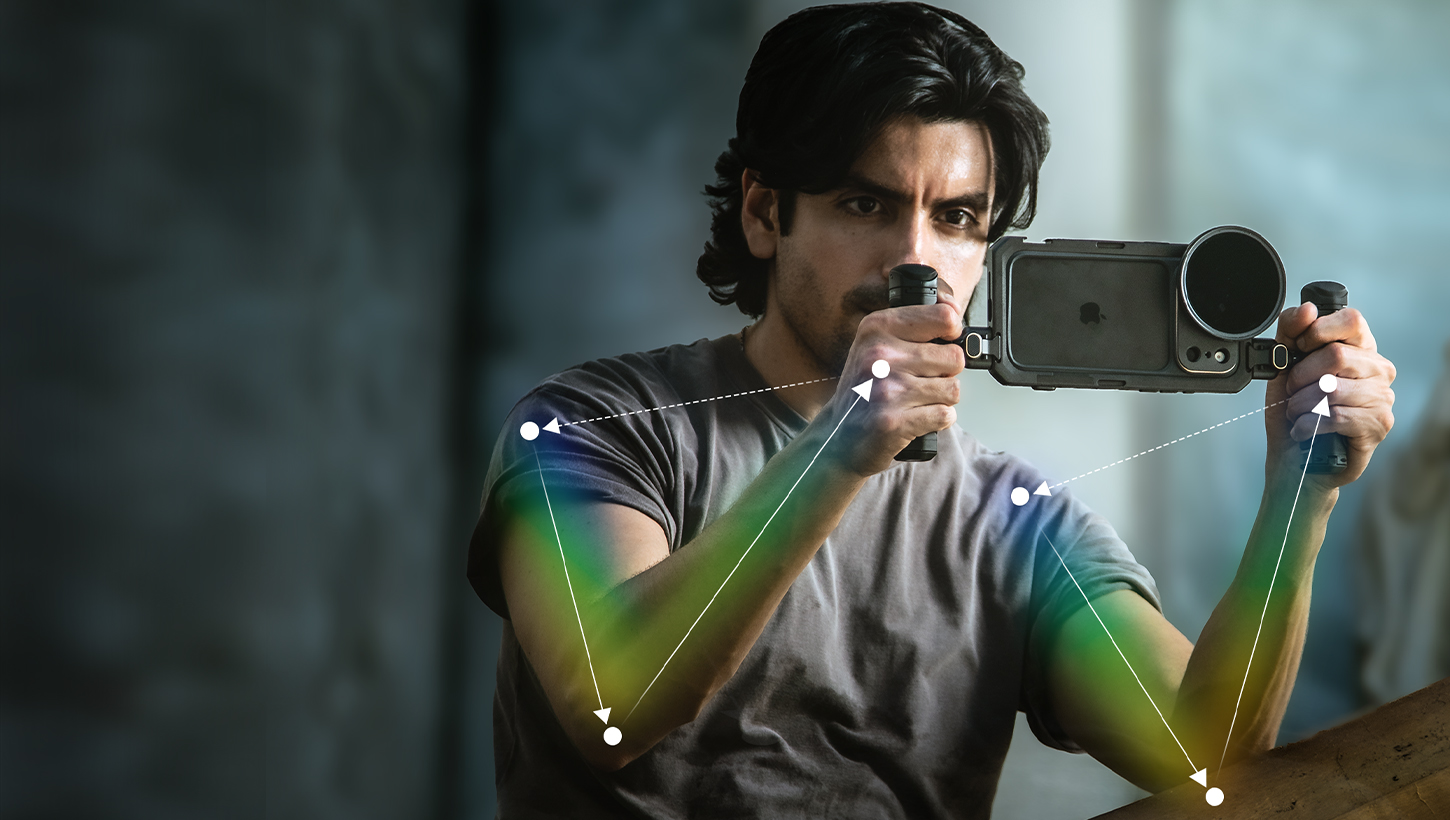
The limitations of a bare smartphone become apparent. Its flat design is naturally suitable for holding, but not for professional control. That's the purpose of a smartphone shooting rig.
The Phone Rig Ecosystem
Phone Cage
The phone cage is the foundation of the entire system. It is an aluminum alloy frame that surrounds the smartphone and provides standard interfaces (cold shoe, 1/4" thread, Arca-Swiss dovetail groove) for all accessories.
Core Functions:
-
Provide standard interfaces to expand accessories such as fill lights and microphones
-
Physically protect the smartphone from accidental drops
-
Enhance grip for more stable two-handed operation
-
Some models have a built-in ND filter holder
Key Purchase Points:
-
Compatibility: Confirm it supports your smartphone model (including phone case thickness)
-
Material: Prioritize aluminum alloy for durability and good heat dissipation
-
Interface Layout: Whether the cold shoe position is convenient and the number of threaded holes
-
Quick Release Design: Ability to assemble and disassemble quickly
Dual Hand Grip
The dual-handle grip is the first expansion accessory I highly recommend. It simulates the two-handed holding posture of a professional video camera, bringing three key improvements:
-
Stability: Two-handed support for smooth horizontal movement
-
Controllability: Thumb control of side buttons for more precise operation
-
Vertical/Horizontal Switching: Switch between horizontal and vertical composition in one second
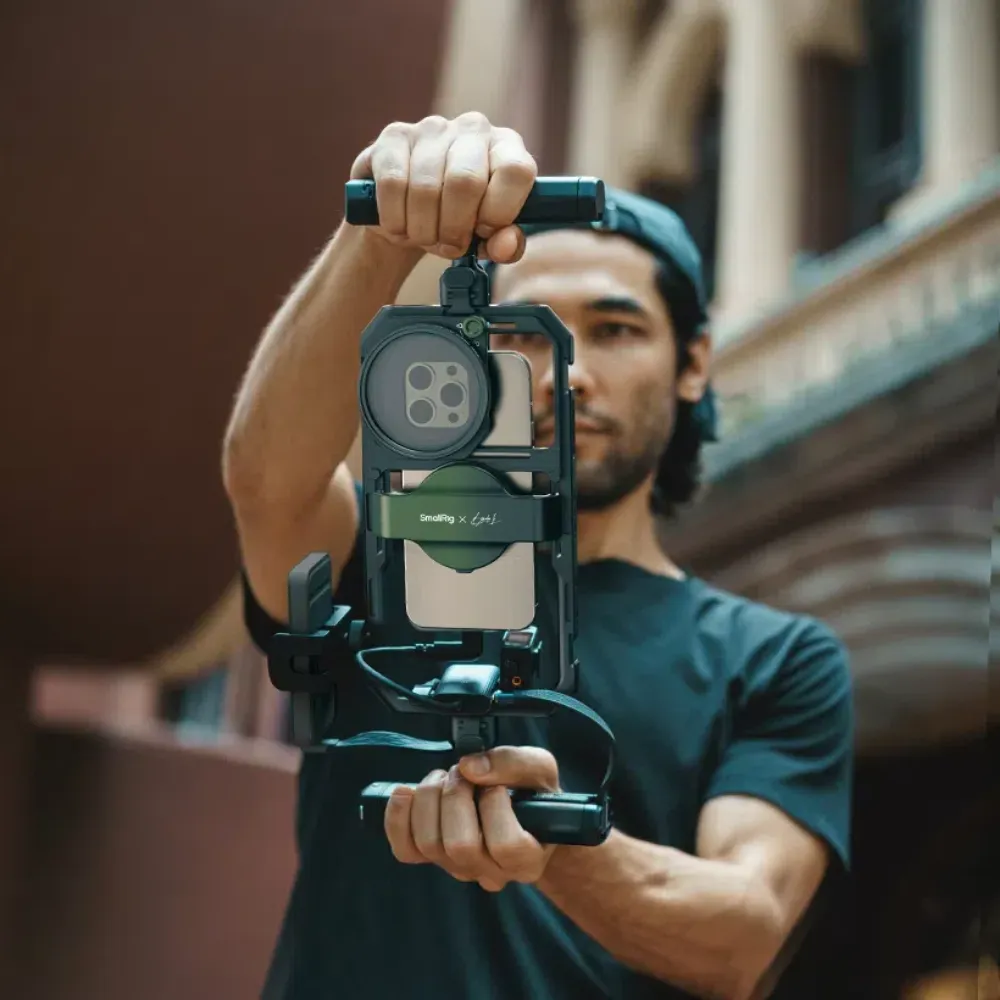
This type of handle is usually installed on the side of the phone cage, with a magnetic or snap-on design to ensure quick assembly and disassembly. The SmallRig x Brandon Li All-in-One Mobile Video Kit is a representative of such products — the handle not only supports free rotation at multiple angles but also has built-in physical remote control buttons that can directly control shooting. For creators who need to publish content on multiple platforms, it offers more convenient operation, more flexible composition, and a qualitative leap in creative efficiency.
Lighting Solutions: Taking Smartphone Photography Beyond "Adequate"
Smartphones have always struggled in low-light environments. Even the latest flagship smartphones will show a significant drop in image quality in dim cafes, street scenes at night, and backlit portrait scenarios. A portable fill light is the second cornerstone of a mobile cinema shooting system.
Small Size, Big Power: P108 Neo mini LED Video Light
The SmallRig P108 Neo is a portable fill light specially designed for smartphones:
-
Plug-and-Play: Cold shoe quick release, directly mounted on the phone cage without additional cables
-
RGB Atmosphere: Multi-color modes for easy creative lighting effects
-
Portable and Easy to Carry: Doesn't add burden when going out
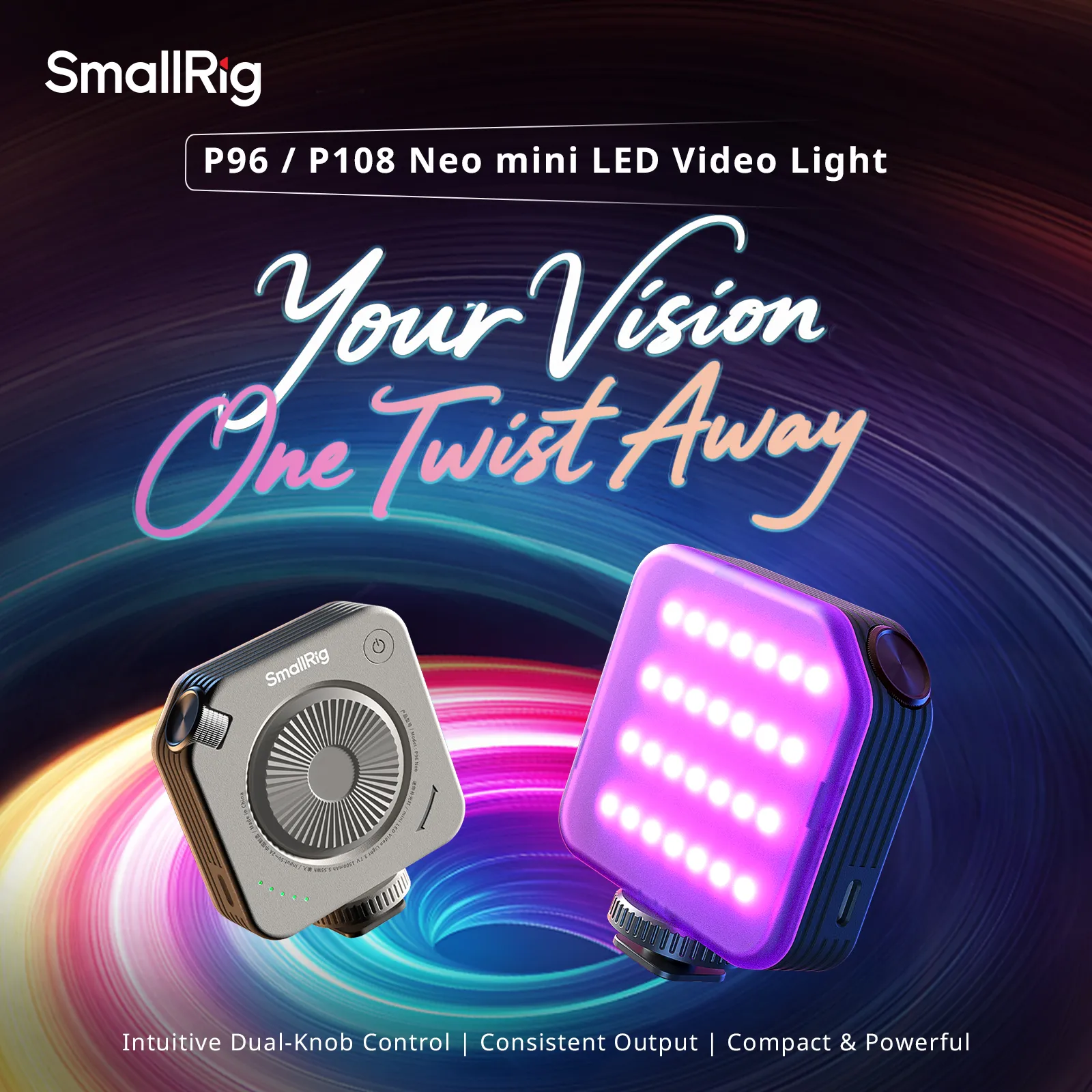
The core problem it solves is: insufficient front light and cold color tone when taking selfies with a smartphone. Especially in live streaming, interviews, and vlog scenarios, a P108 Neo can upgrade your facial lighting from "dim direct smartphone output" to "professional skin tone restoration".
Professional Advanced Solution: 40W Mini RGBWW Video Light
-
40W High Power: Still sufficient in strong outdoor light
-
Magnetic Design: Quick lighting setup without delaying the shooting rhythm
-
Handheld: Suitable for mobile following shots
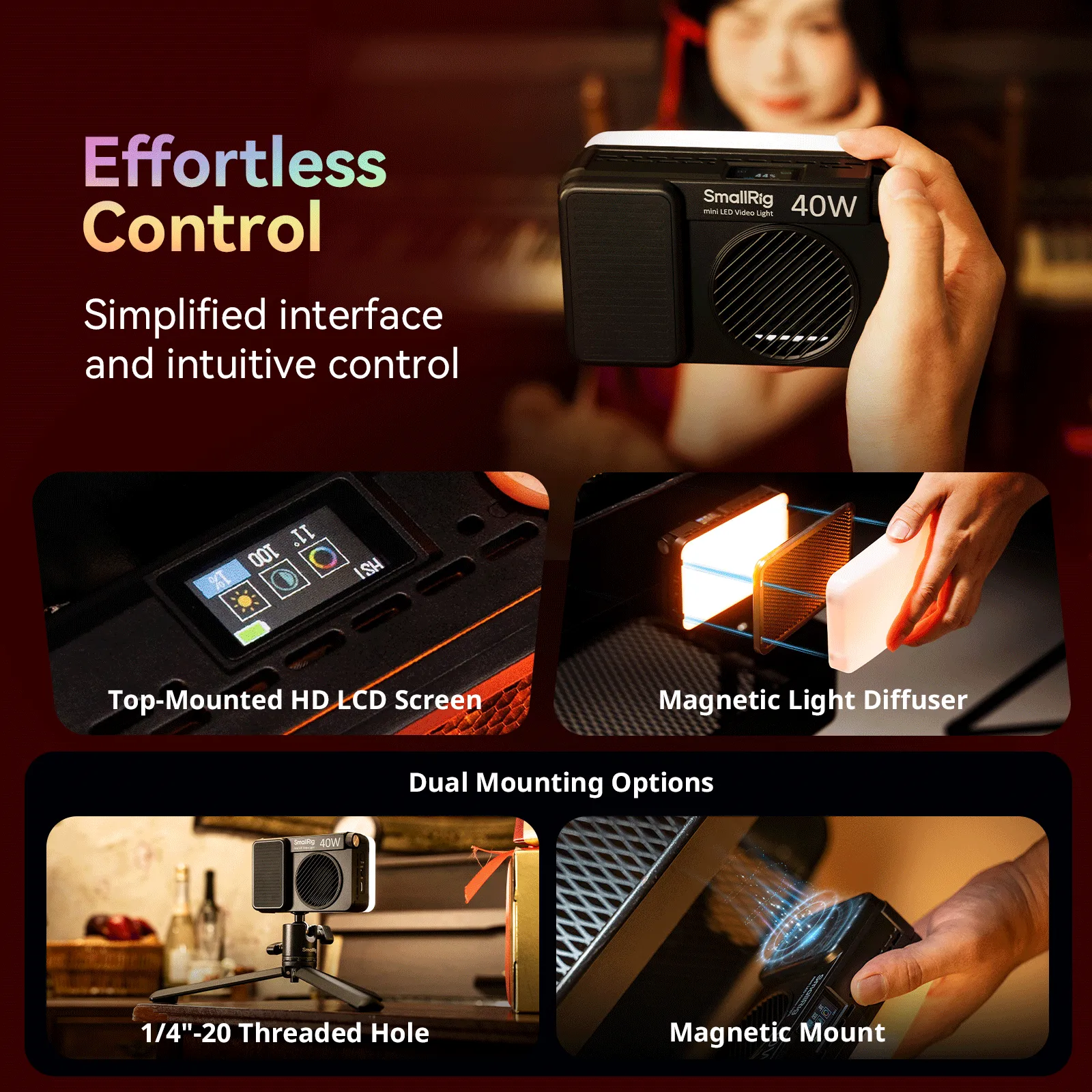
Scenario Recommendations: Outdoor vlogs, street documentaries, wedding scene cutaways
Audio Solutions: More Important Than the Picture Is the Sound
Bad audio will kill good footage faster than bad lighting. Imagine: a video with perfect footage but noisy sound, and a video with average footage but clean sound — which one would make you watch until the end?
Smartphone Audio Pain Points
-
Built-in microphones have poor directionality and high ambient noise
-
When the smartphone is close to the mouth, touch operations will block the sound
-
Wired lapel microphones require adapters and are cumbersome to install
Recommended Solutions
|
Device Type
|
Applicable Scenarios
|
Recommended Reasons
|
|---|---|---|
|
Wireless Lapel Microphone
|
Interviews, Vlogs, On-camera Commentary
|
Free from cable constraints and mobile freedom
|
|
On-camera Shotgun Microphone
|
Documentaries, Street Interviews
|
Strong directionality and suppression of ambient noise
|
|
Desktop Microphone
|
Indoor Live Streaming, Product Commentary
|
Pure sound quality and USB direct connection support
|
It is recommended to prioritize investing in a wireless lapel microphone system, which is the most cost-effective equipment upgrade for mobile video creation.
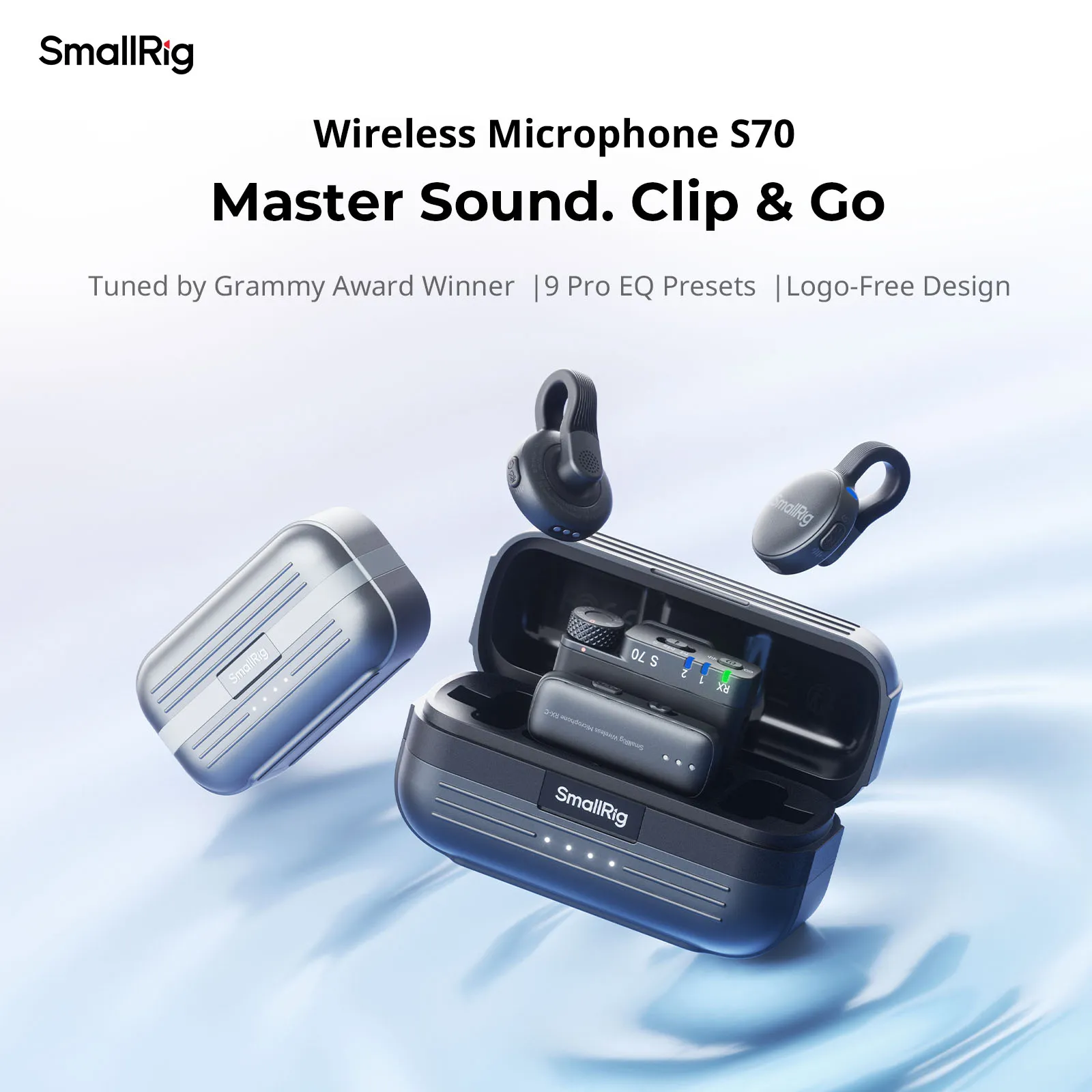
All-in-One Choice: S70 Ultra Thin Invisible Wireless Microphone
-
Compact Size, Essential for Mobile Creation: The S70 features a compact design with a lightweight transmitter that clips onto the collar without weighing it down or being obtrusive. The biggest fear in mobile shooting is equipment becoming a burden, and the S70's size solves this problem.
-
Cost-Effective, Low Threshold for Beginners: The product's pricing is friendly to new content creators — there's no need to invest too much budget in audio equipment; it's more worthwhile to allocate funds to lighting and stabilizers.
-
3-Level Noise Reduction + 9 Built-in EQ Presets, Beginner-Friendly: Three levels of noise reduction are available for direct switching in different scenarios such as cafes, streets, and meeting rooms; 9 built-in EQ presets eliminate the need for post-production audio tuning, allowing for immediate use after recording with efficiency as the top priority.
For smartphone video shooting, the first audio equipment upgrade should be a wireless lapel microphone. Among numerous lapel microphones, the S70's size, pricing, and function presets are highly aligned with the needs of mobile content creation.
Shooting Tips: From Gear to Creation
A rig doesn't make you a filmmaker. But it does make filmmaking more possible. With a rig system, the next step is how to use it. The following tips are summarized from countless smartphone shooting sessions:
Shoot Both Horizontal and Vertical, Get More Value from One Shot
Horizontal composition is suitable for storytelling, while vertical composition is suitable for platform distribution. The core of switching between horizontal and vertical is not re-composition, but advance planning.
It is recommended to confirm before shooting:
-
Which is the main distribution platform for the video? (YouTube vs. Instagram/TikTok/Reels)
-
Is dual-camera simultaneous output required?
-
At what point does the switch between horizontal and vertical happen? (Switch when entering/exiting the frame, or crop in post-production)
Two-Handed Walking Follow Shots
Walking follow shots are the most common camera movement in vlogs. The key points are:
-
Small, steady steps with a low center of gravity
-
Arms close to the body to reduce up and down jitter
-
Two-handed grip; turn the body instead of sweeping the arms when moving horizontally
-
Breath control: shoot when inhaling, stop when exhaling
Even with a Steadicam or smartphone stabilizer, these basic skills are still effective.
Creative Lighting: One Light, Multiple Uses
One small light, multiple uses:
-
Key Light: Front fill light to illuminate the subject
-
Rim Light: Side-back lighting to separate the subject from the background
-
Handheld Sweep Light: Hold the light and move slowly to simulate natural light sweeping by
-
Color Mood: Use colored light on the background to increase atmosphere
Vertical Storytelling: Shot Language for Short Videos
Vertical videos are not equivalent to "turning horizontal content vertical". Vertical screens have their own unique language:
-
Closer Close-Ups: Vertical screens are naturally suitable for facial close-ups with a stronger sense of immersion
-
Headroom: Leave space in the direction of the character's line of sight, but headroom in vertical screens needs to be more restrained
-
Text-Friendly: The lower 1/3 is the text safe area, and vertical screens are naturally suitable for subtitles
-
Shallow Depth of Field Is More Valuable: Due to the physical aperture limitations of smartphones, shallow depth of field in vertical screens is more precious
Summary
Smartphone cinema rigs solve physical problems: stability, controllability, and expandability. They free your creative intentions from the limitations of equipment. However, in the end, the videos that make audiences stop and watch until the end are never moved by the rig — but by real stories, warm expressions, and unique perspectives.
Keep Reading
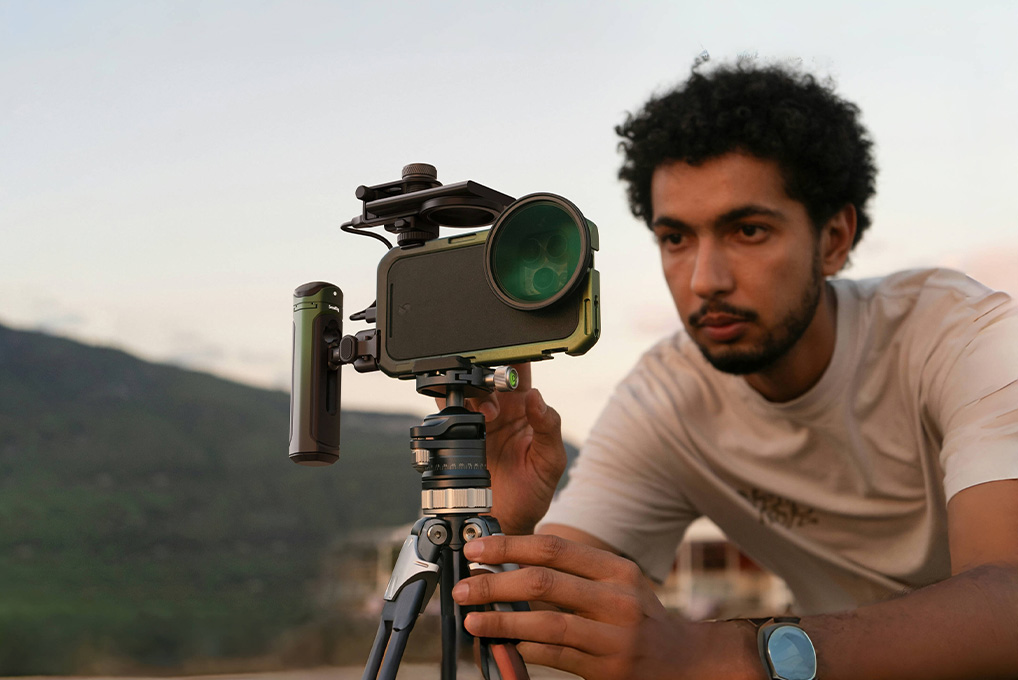 Phone Cages Explained: What They Do And If You Actually Need One
 4596/4841-Wireless Remote Shutter Firmware Upgrade Video Guide
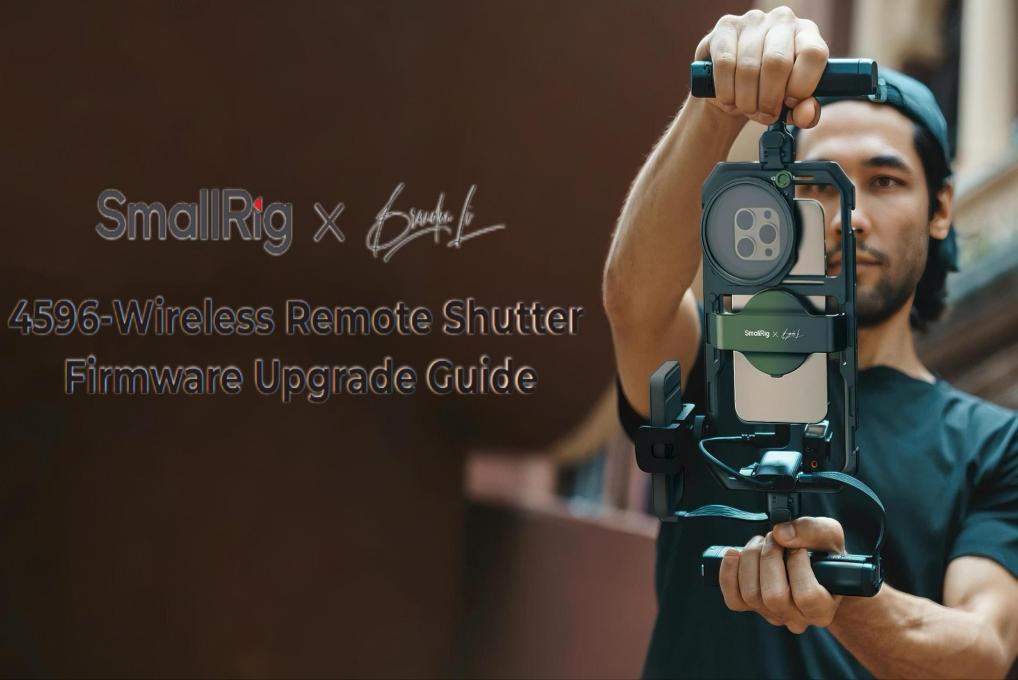 4596 Wireless Remote Shutter Firmware Upgrade Guide
Related Products from SmallRig